The Docket - Case No. 11
Three notes, six seconds, four years
The Beastie Boys licensed the sample, won the case, and got four years of federal litigation anyway.
.jpg)
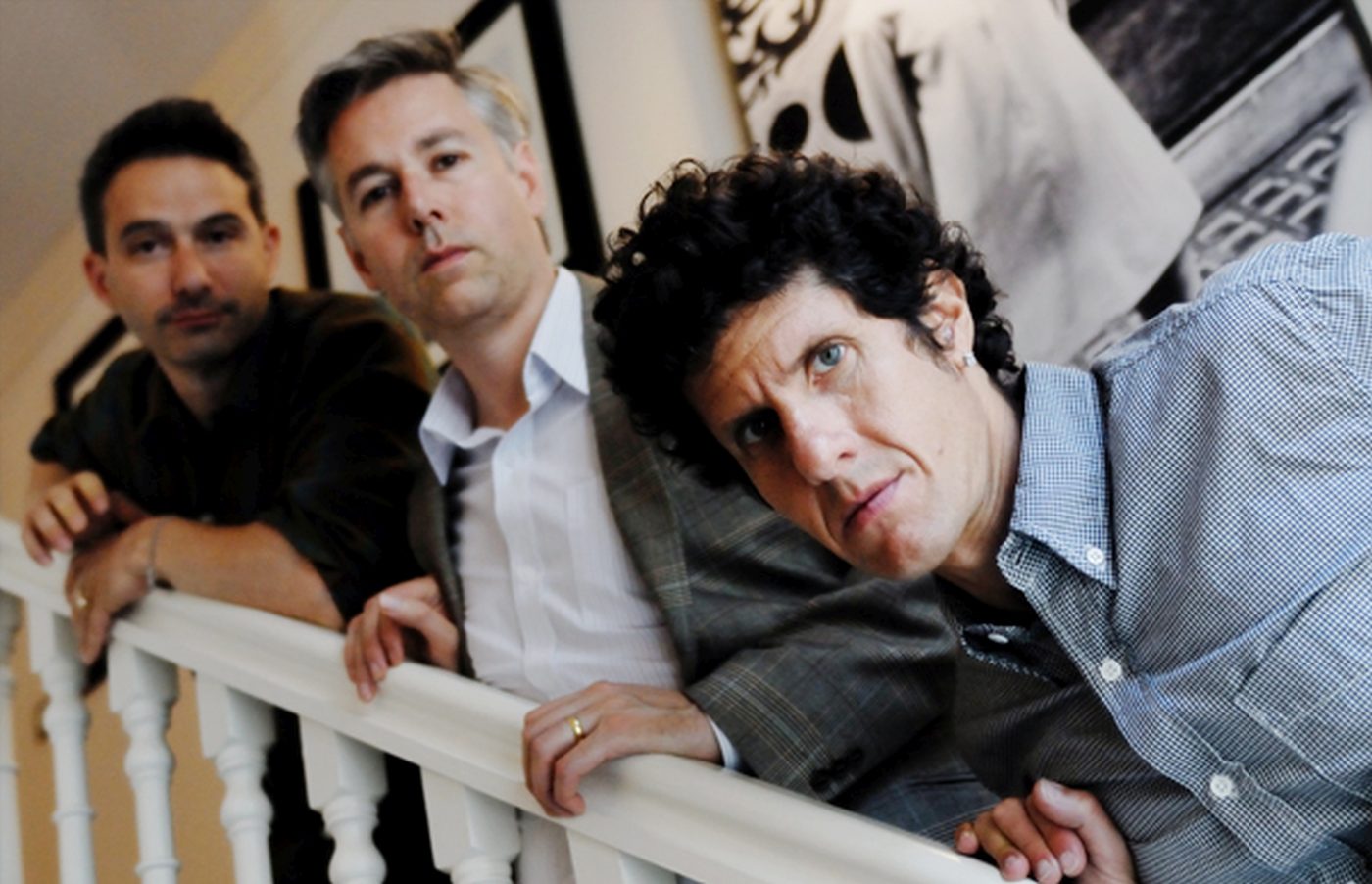
May 9, 2000. A copyright complaint lands in the federal courthouse in Los Angeles. The plaintiff is James W. Newton Jr., jazz flutist, composer, university professor. The defendants are the Beastie Boys and everybody who touched the record. (The complaint names everybody. Complaints always name everybody.)
The fight is over six seconds. Three notes, C to D-flat and back to C, sung into a flute over a held C note, from Newton's composition "Choir." In 1992 the Beastie Boys lifted those six seconds, looped them over forty times through "Pass the Mic," and paid one license fee: $1,000 to ECM Records.
They did not pay Newton. He owned the composition and wanted $150,000 for every willful infringement.
What the papers say
The First Amended Complaint, filed February 22, 2001, names the whole chain: the three Beastie Boys, their labels, their publishers, two record clubs, and even Janus Films and the Criterion Collection.
Newton recorded "Choir" in 1981 and licensed the sound recording to ECM for $5,000, recording only. Newton kept every right in the composition. The Beastie Boys licensed the recording from ECM in 1992 and never asked Newton about the song. He sued for infringement of the composition; the Lanham Act claims were dismissed September 12, 2000.
The record's best detail is the man they were up against: an internationally recognized flutist and, by the time he sued, an eighteen-year Down Beat Critics' Poll winner (1982–1999) — a streak that ultimately ran 23 years (1982–2004). His signature piece "Choir" drew on gospel, Japanese court music, traditional African music, and classical music. This was not a throwaway groove.
The money
Newton took $5,000 from ECM for the recording. The Beastie Boys paid ECM $1,000 in 1992 for six seconds of it. Newton's complaint then asked the court to pick a lane: actual damages plus profits, or $150,000 per willful infringement.
He collected none of it. On May 21, 2002, Judge Nora Margaret Manella granted summary judgment to the Beastie Boys; on November 4, 2003, the Ninth Circuit affirmed; a rehearing petition was denied in 2004.
The opinions do not publish anyone's legal bills, so I will not invent a number. What the record shows is four years of litigation, ending in a Ninth Circuit appeal argued April 7, 2003. That is not a small invoice. That is the cost of being right.
The ruling
The court's words: "We hold today that Beastie Boys' use of a brief segment of that composition, consisting of three notes separated by a half-step over a background C note, is not sufficient to sustain a claim for copyright infringement. We affirm the district court's grant of summary judgment on the ground that Beastie Boys' use of the composition was de minimis and therefore not actionable."
Translation: the copying was real, but the court skipped originality. The use was so meager and fragmentary that an average audience would not recognize Newton's hand as a composer, apart from his talent as a performer. When the taking is that small, the law does not count it.
Judge Graber dissented. The majority did not move. AFFIRMED.
The risk ledger
This is the Near Miss pillar in its purest form. In 1991, Grand Upright Music v. Warner Bros. set the rule: Judge Duffy opened with a biblical command and referred the defendants to the U.S. Attorney. Clear the sample or perish.
The Beastie Boys did that. They cleared the sample and paid the thousand dollars. And they still got four years of federal litigation, because clearing the recording is not clearing the song.
The meter runs whether you win or lose. Sit with that.
The coverage lens
Media liability coverage exists for disputes like this: someone says your creative work steps on their rights, and the fight starts long before anyone knows who is right. The defense bill is the certain bill, and Newton v. Diamond proves it arrives even when the use was licensed, even when you win.
No promises here. Whether any claim would be covered depends on the policy as issued and the facts of the claim. But the category exists because of cases like this: the near miss that still costs.
The docket
- Ninth Circuit, Newton v. Diamond, No. 02-55983, 349 F.3d 591 (Nov. 4, 2003): law.berkeley.edu
- Ninth Circuit, Newton v. Diamond, amended opinion and rehearing denial, 388 F.3d 1189 (2004): copyrightalliance.org
- C.D. Cal., Newton v. Diamond, No. CV-00-04909-NM, summary judgment, 204 F. Supp. 2d 1244 (May 21, 2002): static.case.law
- First Amended Complaint, No. CV 00-04909-NM (Feb. 22, 2001): bpb-us-w2.wpmucdn.com
- S.D.N.Y., Grand Upright Music Ltd. v. Warner Bros. Records Inc., 780 F. Supp. 182 (Dec. 17, 1991): law.justia.com
Sources
- Ninth Circuit opinion, Newton v. Diamond, 388 F.3d 1189 (9th Cir. 2004), opinion text via the GWU Music Copyright Infringement Resource: blogs.law.gwu.edu
- First Amended Complaint, Newton v. Diamond, No. CV 00-04909-NM (Feb. 22, 2001): bpb-us-w2.wpmucdn.com
- James Newton CV (Down Beat Critics' Poll record): jamesnewtonmusic.com
- UCLA School of Music, 'A Tribute to James Newton' (faculty bio): schoolofmusic.ucla.edu
Legal disclosure
SongSure LLC is an insurance agency. This article is for general information and education only. It is not legal advice, not insurance advice, and not an offer, quote, or promise of coverage. Case summaries are based on publicly available court records and are simplified; they may omit details. Any coverage would be subject to underwriting review, carrier approval, and the terms, conditions, limitations, and exclusions of the policy as issued. Past case outcomes do not predict future results or coverage decisions. SongSure is in pre-launch and is not currently writing coverage. Consult a licensed attorney for legal questions and a licensed insurance producer for coverage questions.