The Docket - Case No. 10
Three words, ten defendants, "Thou shalt not steal."
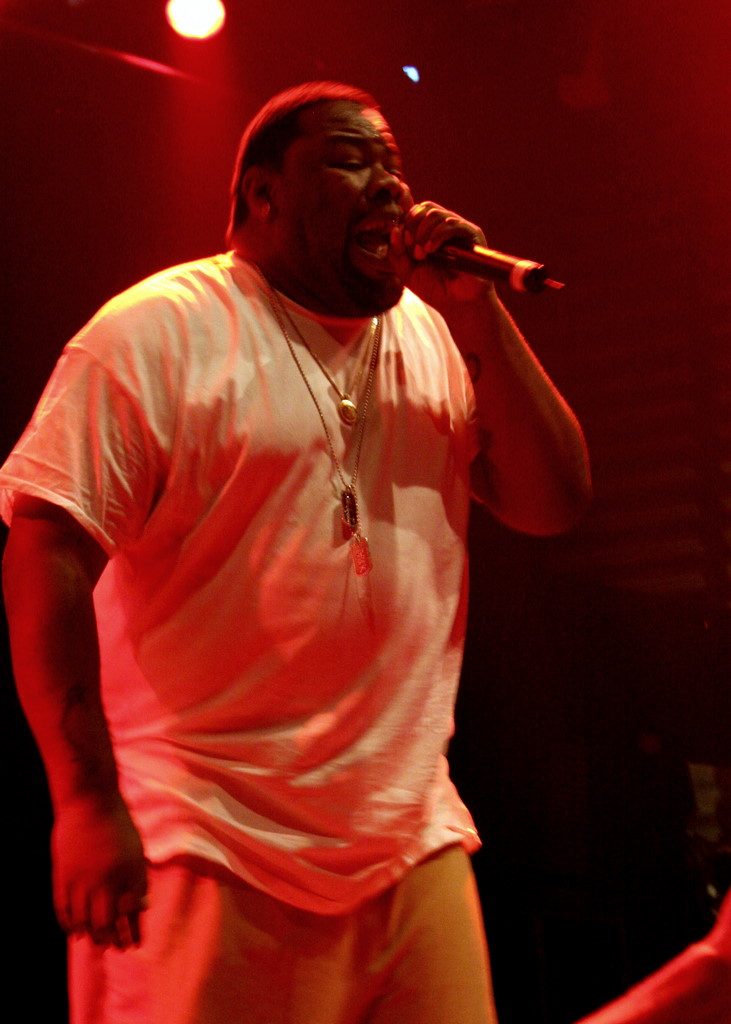
Biz Markie asked for a license to use Gilbert O'Sullivan's song, then released the record without one. The papers are worse than the legend.

December 17, 1991, a federal courthouse in lower Manhattan: a judge is ending an argument the music business was having with itself for a decade.
Judge Kevin Thomas Duffy of the Southern District of New York does not bother with throat-clearing. The first line of his December 17, 1991 Memorandum and Order is a Bible verse: "Thou shalt not steal."
The case is Grand Upright Music Ltd. v. Warner Bros. Records, Inc. The song is "Alone Again (Naturally)," written and performed on records by Raymond "Gilbert" O'Sullivan. Biz Markie does not deny lifting it: three words, plus a portion of the music, for "Alone Again" on his album I Need a Haircut. No license.
The defendants' whole argument is that everyone does it. The judge is not moved. The order grants a preliminary injunction against all ten defendants, then goes one step further: a referral to the U.S. Attorney for the Southern District of New York for consideration of criminal prosecution.
What the papers say
Grand Upright Music Limited sued Warner Bros. Records and nine co-defendants over the unlicensed use of "Alone Again (Naturally)" and its master recording. The defendants admitted the use, so the only live issue was ownership.
The court found three categories of proof. First, the paper chain: original copyright certificates made out to NAM Music, Inc., a deed vesting title in Gilbert O'Sullivan, and a deed transferring the copyrights to Grand Upright. Second, O'Sullivan's own testimony that Grand Upright owned the song: "a thoroughly credible and believable witness." Third, the defendants' own conduct: before the album's release, they contacted O'Sullivan and his brother/agent to try to obtain a license.
The record's best detail: defense counsel objected that the copyright certificates were not "authenticated," arguing someone from NAM Music, Inc. would have to identify them. The problem, as the judge noted: NAM Music, Inc. had long been dissolved, "as defense counsel knew."
The money
This opinion prices nothing. It is a preliminary injunction decision: no damages, no fees, no license figure, and no record of what the case cost or whether money changed hands afterward.
What the papers do show is a fight expensive before any trial. Two law firms (Carro, Spanbock, Kaster & Cuiffo for the plaintiff; Cinque & Cinque for the defense). Four executive depositions in a four-day span, November 19 to 22, 1991. Ten defendants, from the label and its international affiliate to the artist, his companies, and two executives named personally.
Brought by Order to Show Cause and decided December 17, 1991: this is the cheap end of copyright litigation, a preliminary proceeding, and it still drew in a major label's clearance apparatus. That is what the docket supports, and it is enough.
The ruling
The court held Grand Upright owned the copyrights in the song and the master recording, found infringement, granted the injunction, and referred the defendants to the U.S. Attorney under 17 U.S.C. Section 506(a) and 18 U.S.C. Section 2319.
One quote, then plain English: "One would not agree to pay to use the material of another unless there was a valid copyright!"
Translation: the defendants' own letter asking O'Sullivan's camp for "consent to the use of the Original Composition" proved they knew a valid copyright existed and that they needed permission. Asking for the license and not getting it did not make this a finding of willfulness. The opinion's actual point was that the defendants' own license requests were the most persuasive evidence they knew a valid copyright existed.
On the defense that unauthorized sampling was rampant: "totally specious," the court said. "The mere statement of the argument is its own refutation."
The risk ledger
No trial, no dollars collected, and still: ten defendants, two law firms, and executive depositions within a four-day span.
The defendants' own paper trail did the plaintiff's work. Before release, Biz Markie's lawyers asked O'Sullivan's camp for "consent," and on August 16 they warned counsel for Cold Chillin' Records, Inc. in writing that releasing the album before "the appropriate consents" were secured would invite legal action: "such action will not arise due to the fact that Biz used the samples in his recorded compositions, but rather, due to the fact that Cold Chillin' released such material prior to the appropriate consents being secured." The clearance letters became the defendants' own best evidence that they knew a valid copyright existed.
The meter runs whether you win or lose, and here the loser did not just lose a motion. The judge sent the file to a federal prosecutor under the criminal copyright statutes. Losing a civil injunction is one thing. A criminal referral is another.
The coverage lens
This is the class of claim media liability and errors-and-omissions coverage is built for: someone says your work used their rights without permission, and you need defense counsel first. Defense costs sit at the center of what the coverage addresses, and this case shows why: ten defendants were defending themselves the moment the order issued, before any damages existed to argue about.
No promises here. Whether any claim would be covered depends on the policy as issued, its terms, conditions, limitations, and exclusions, and the facts of the claim.
The docket
- U.S. District Court for the Southern District of New York, Grand Upright Music Ltd. v. Warner Bros. Records, Inc., No. 91 Civ. 7648 (KTD), Memorandum and Order, December 17, 1991 (780 F. Supp. 182), full opinion text: law.justia.com
- Music Copyright Infringement Resource (George Washington University Law), Grand Upright v. Warner case page reproducing the opinion: blogs.law.gwu.edu
Sources
- U.S. District Court for the Southern District of New York, Grand Upright Music Ltd. v. Warner Bros. Records, Inc., 780 F. Supp. 182 (1991), opinion text via the GWU Music Copyright Infringement Resource: blogs.law.gwu.edu
Legal disclosure
SongSure LLC is an insurance agency. This article is for general information and education only. It is not legal advice, not insurance advice, and not an offer, quote, or promise of coverage. Case summaries are based on publicly available court records and are simplified; they may omit details. Any coverage would be subject to underwriting review, carrier approval, and the terms, conditions, limitations, and exclusions of the policy as issued. Past case outcomes do not predict future results or coverage decisions. SongSure is in pre-launch and is not currently writing coverage. Consult a licensed attorney for legal questions and a licensed insurance producer for coverage questions.