The Docket - Case No. 19
One title, two songs, twenty-five years
Michael Bolton testified he never heard the Isley Brothers' obscure 1966 single, but a jury returned a general verdict of infringement, and the verdict costs $5.4 million.
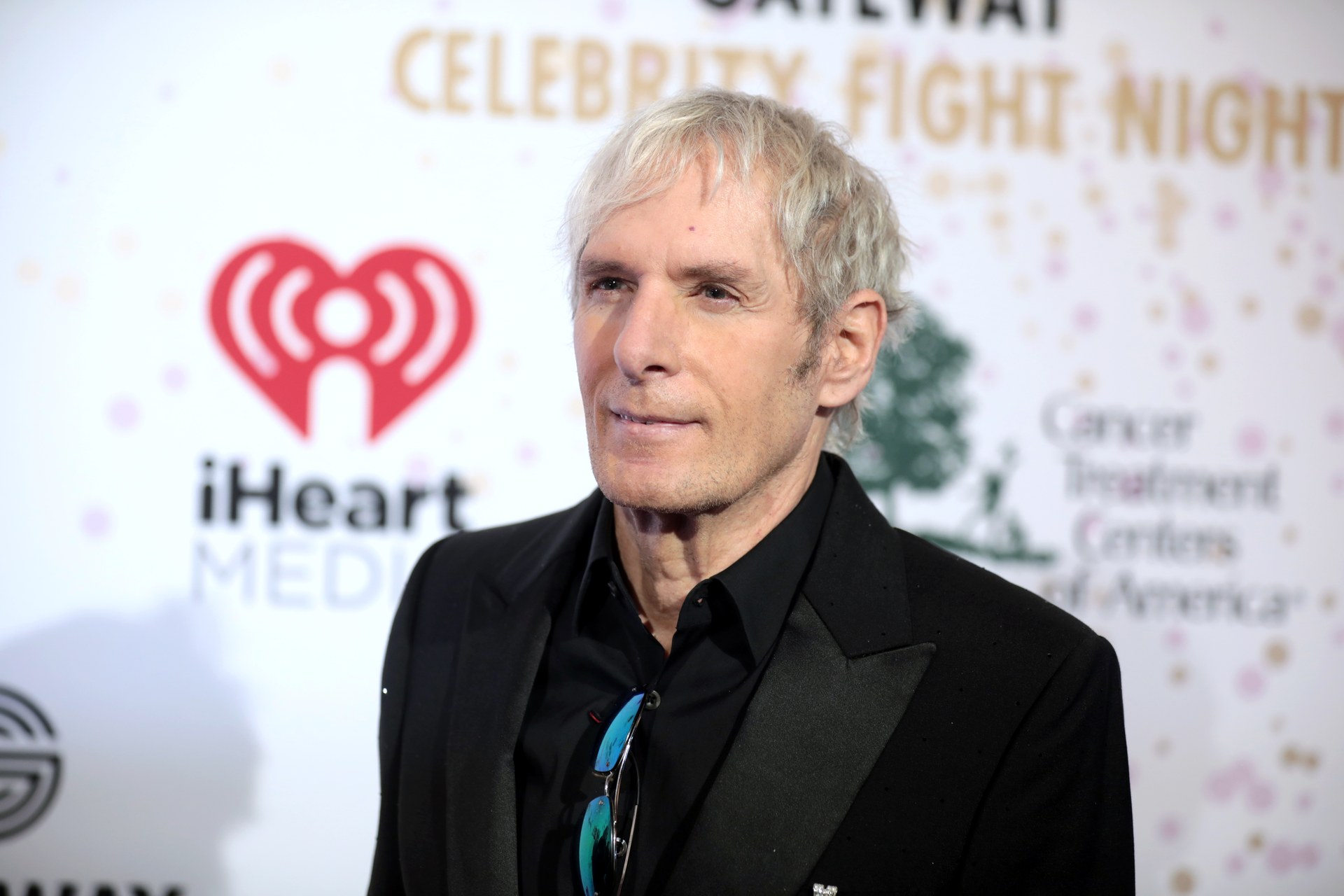
On April 25, 1994, a federal jury in Los Angeles decided that Michael Bolton's 1991 hit 'Love Is a Wonderful Thing' infringed the copyright in the Isley Brothers' 1964 song of the same title. Bolton had testified that he never heard the earlier song. The jury returned a general verdict of infringement; it did not have to find that he was lying. Under the law, subconscious copying was a permissible inference. That verdict was worth $5,448,447.
The Ninth Circuit called it, in its own words, 'a weak case of access.' It affirmed anyway.
What the papers say
The plaintiff was Three Boys Music Corporation, holder of the copyright in the Isley Brothers' song, which the brothers wrote and recorded in 1964 for United Artists. United Artists hoped to benefit from the Isley Brothers' Motown success by releasing it as a 45 single in 1966. Trade publications predicted a hit. The song peaked at No. 110 on Billboard's 'Bubbling Under the Hot 100' and never touched a Top 100 chart. Bolton and Goldmark wrote their song in early 1990 and released it in April 1991 as part of 'Time, Love and Tenderness,' where it finished the year at No. 49 on Billboard's year-end pop chart. The infringement action was filed February 24, 1992, and the parties agreed to a trifurcated trial before Judge Lourdes G. Baird.
The record's best detail is the four-pillar access case. One: Bolton (13) and Goldmark (15) were Connecticut teenagers steeped in R&B in 1966; Bolton sang covers of Black artists' songs and his brother had a strong record collection. Two: three disk jockeys testified to 1966-67 play in the Northeast. Jerry Blavitt played it on the Philadelphia television show 'The Discophonic Scene' and on Philadelphia radio. Earl Rodney Jones played it a minimum of four times a day for eight to twenty-four weeks on WVON in Chicago (the opinion's exact phrasing: "an eight to 14 to 24 week period"). Jerry Bledsoe played it on WUFO Buffalo, and said WWRL New York was playing it in 1967, plus twice on the television show 'Soul.' Three: Ronald Isley testified that Bolton told him at a 1988 benefit, 'I know this guy. I go back with him. I have all his stuff.' Four: Bolton's own work tape caught him asking Goldmark whether their tune was Marvin Gaye's 'Some Kind of Wonderful.' The district court wrote that a reasonable jury could infer Bolton was subconsciously drawing on the Isley song and misattributing it.
On similarity, the plaintiff's expert Dr. Gerald Eskelin testified the songs shared a combination of five unprotectible elements: the title hook phrase (lyric, rhythm, and pitch), the shifted cadence, the instrumental figures, the verse/chorus relationship, and the fade ending. The defendants' own expert conceded that combination appeared nowhere in the prior art.
The money
Phase one, April 25, 1994: infringement. Phase two, five days later: the jury found Bolton's song accounted for 28 percent of the profits from 'Time, Love and Tenderness,' and that 66 percent of the song's profits were attributable to the infringing elements. Phase three came through a Special Master, whose amended report the district court adopted on December 5, 1996: Sony Music $4,218,838; Bolton $932,924; Goldmark $220,785; their publishing companies $75,900. Total: $5,448,447.
The opinions also settled the tax question. Bolton and Goldmark, found to be non-willful infringers, could deduct the income taxes and management fees they actually paid. Sony Music could not deduct its nearly $1.7 million net operating loss offset. The opinions do not publish anyone's legal bills, so this article will not invent one.
The ruling
The Ninth Circuit affirmed on every issue the defendants raised: access, substantial similarity, the profit apportionment, the tax deductions, and the denial of the defendants' second new-trial motion (built on a late claim by a group called the Turkcords that they authored the 1964 song), which was dismissed as untimely. Credibility calls belong to the jury, and the court would not substitute its judgment, even while calling the access case weak.
Translation: subconscious copying has been the law since Judge Learned Hand's 1924 decision in Fred Fisher, Inc. v. Dillingham. 'Everything registers somewhere in our memories, and no one can tell what may evoke it.... Once it appears that another has in fact used the copyright as the source of this production, he has invaded the author's rights. It is no excuse that in so doing his memory has played him a trick.' The Ninth Circuit held that 'the lapse of roughly twenty-five years' between alleged exposure and the new song 'provides no basis for reversal' and 'does not preclude a finding of copying.'
One line of later history, because it matters: the opinion's inverse-ratio-rule discussion was overruled by Skidmore v. Led Zeppelin, 952 F.3d 1051 (9th Cir. 2020), sitting en banc, which rejected the inverse ratio rule outright. The verdict itself stands.
The risk ledger
Filed February 24, 1992. Jury verdict April 1994. Final damages judgment December 1996. Ninth Circuit opinion May 9, 2000. Supreme Court denies certiorari January 22, 2001. Nine years in litigation, across three trial phases, a special master on damages, one Ninth Circuit appeal (two consolidated docket numbers, 97-55150 and 97-55154), and a Supreme Court cert petition (531 U.S. 1126, denied January 22, 2001), for a song nobody claimed was copied on purpose.
The opinions do not publish anyone's legal bills, so this article will not invent one. What the docket shows is nine years of Sony, Bolton, and Goldmark paying for defense through a trifurcated trial, a damages proceeding, and a full Ninth Circuit appeal, and then paying $5.4 million on top. That is what a weak-access claim can cost when a jury believes its own memory of the evidence.
The meter runs whether you win or lose. Sit with that.
The coverage lens
This is the exact class of allegation that media liability coverage is built for: a multi-defendant copyright claim against an artist, a co-writer, publishers, and a record label, where liability can attach without conscious intent, through a memory playing a trick twenty-five years later. Defense costs are a central part of what the coverage line addresses, and the defense bill is the certain bill in every case like this one. It arrives for winners and losers alike, years before anyone knows who won.
No promises here. Whether any particular claim would be covered depends on the policy as issued, its terms, conditions, limitations, and exclusions, and the facts of the claim. But the category exists because of cases like this.
Sources
Every legal claim in this article is drawn from the following court record, the Ninth Circuit opinion — not from secondary commentary:
- U.S. Court of Appeals for the Ninth Circuit, Three Boys Music Corp. v. Bolton, 212 F.3d 477, opinion filed May 9, 2000 (opinion by Judge D.W. Nelson); certiorari denied, 531 U.S. 1126 (Jan. 22, 2001): law.justia.com
The docket
- U.S. Court of Appeals for the Ninth Circuit, Three Boys Music Corp. v. Bolton, 212 F.3d 477, opinion filed May 9, 2000 (opinion by Judge D.W. Nelson): law.justia.com
- GWU Music Copyright Infringement Resource, Three Boys Music v. Michael Bolton case page (professor commentary — not a legal document): blogs.law.gwu.edu
Legal disclosure
SongSure LLC is an insurance agency. This article is for general information and education only. It is not legal advice, not insurance advice, and not an offer, quote, or promise of coverage. Case summaries are based on publicly available court records and are simplified; they may omit details. Any coverage would be subject to underwriting review, carrier approval, and the terms, conditions, limitations, and exclusions of the policy as issued. Past case outcomes do not predict future results or coverage decisions. SongSure is in pre-launch and is not currently writing coverage. Consult a licensed attorney for legal questions and a licensed insurance producer for coverage questions.