The Docket - Case No. 12
Two seconds, one license, zero excuses
A two-second Funkadelic guitar sample, looped in an N.W.A track, made the Sixth Circuit declare that sound recordings have no de minimis defense: license the sample or face a trial.
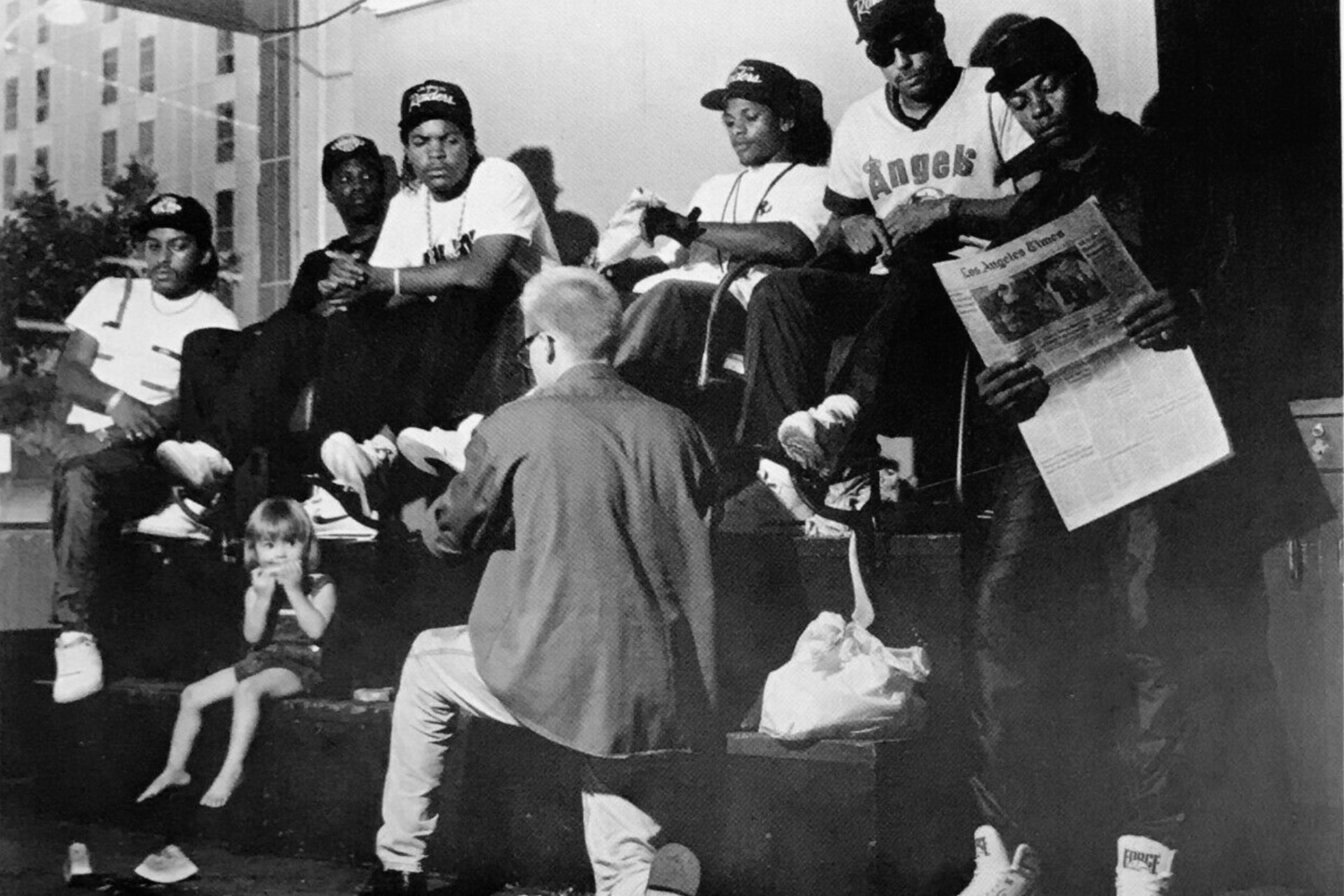
On June 3, 2005, the Sixth Circuit did what no federal appeals court had done before: it threw out the de minimis defense for sampled sound recordings. Two seconds of a Funkadelic guitar solo, looped and lowered in pitch, was enough to revive a copyright claim that the district court had already killed.
The court's famous line was a slogan and a business model in one sentence: 'Get a license or do not sample. We do not see this as stifling creativity in any significant way.'
What the papers say
The plaintiffs were Bridgeport Music, Inc., Westbound Records, Inc., Southfield Music, Inc., and Nine Records, Inc. The defendant was No Limit Films LLC, and the song at the center was N.W.A's 1990 track '100 Miles and Runnin', which No Limit used in the soundtrack of its 1998 film 'I Got the Hook Up'.
The record showed the facts nobody disputed: a two-second sample of the opening guitar solo from Funkadelic's 1975 'Get Off Your Ass and Jam' was copied, its pitch lowered, and the piece looped and extended to sixteen beats, about seven seconds per looped segment, appearing five times in '100 Miles and Runnin' (at 0:49, 1:52, 2:29, 3:20, and 3:46). The sound-recording sample was used without a license and without compensation; the composition side, by contrast, was licensed under the December 1998 Release and Agreement plus an oral synchronization license.
The division of labor mattered: Bridgeport claimed the composition side, Westbound claimed the sound recording side (the court assumed ownership for purposes of the appeal), and Southfield and Nine Records were conceded to have no ownership interest in the copyrights at issue. Claims against Miramax Film Corp. and Dimension Films had already been dismissed with prejudice under a settlement on June 27, 2002. The district court granted summary judgment for No Limit Films, ruling the copying was de minimis and not legally cognizable, and later awarded the company attorney fees and costs.
Bridgeport's composition claims had their own problem: a December 1998 Release and Agreement in which Bridgeport granted a sample-use license to Ruthless Attack Muzick and Dollarz N Sense Music, which the district court found covered No Limit Films through an oral synchronization license.
The money
The only dollar figure in the opinions is the district court's award of attorney fees and costs totaling $41,813.30 to No Limit Films under 17 U.S.C. 505, in an order dated April 24, 2003, which the Sixth Circuit affirmed. The award was cut by 50 percent to account for Westbound's claims, which were not deemed objectively unreasonable in the same way, and Southfield and Nine Records were held jointly and severally liable for 10 percent of it.
No verdict, remittitur, or damages figure appears for the plaintiffs, because the district court found no infringement. The opinion does not disclose the terms of the June 27, 2002 Miramax and Dimension Films settlement.
The ruling
The holding — Sixth Circuit law, not national law: when a defendant does not dispute that it digitally sampled a copyrighted sound recording, courts should apply no de minimis or substantial similarity inquiry. The sound recording owner holds the exclusive right to 'sample' its own recording under 17 U.S.C. 114(b).
Translation: the court reasoned that sampling is a physical taking rather than an intellectual one, that it is never accidental, and that a bright-line rule serves the music industry. As the opinion put it, 'it would appear to be cheaper to license than to litigate.' The court emphasized the ruling was limited to sound recordings, not musical compositions, and that fair use remained available as a defense on remand, about which it expressed no opinion.
The later history is a caution about circuit-by-circuit rules: the Ninth Circuit expressly rejected Bridgeport's reasoning in VMG Salsoul v. Ciccone, the 2016 Madonna 'Vogue' case (creating a circuit split; 9th Circuit slip opinion), and district courts in Florida, California, and Louisiana — plus a New York state trial court, EMI Records v. Premise Media, 2008 WL 5027245 (N.Y. Sup. Ct.) — declined to apply it. No published decision on Westbound's remanded claim could be found, so its ultimate resolution is unknown.
The risk ledger
This case ran from the May 2001 omnibus filing to June 2005, more than four years, inside a litigation campaign that started as nearly 500 counts against about 800 defendants before being severed into 476 separate cases in August 2001. The cost-of-being-right angle cuts both ways: No Limit Films won summary judgment in the district court on some claims but lost the appeal on Westbound's sound-recording claim, and still had to defend a multi-year appeal through a panel rehearing — though it recovered $41,813.30 in fees and costs on the other claims. Westbound's sound recording claim was revived after four years with a brand-new bright-line rule nobody saw coming, and then faced another round on remand.
The opinions do not publish anyone's legal bills, so this article will not invent one. What the docket shows is four years of litigation inside one of the largest copyright campaigns ever filed, and then the appeals and rehearings on top of that.
The meter runs whether you win or lose. Sit with that.
The coverage lens
This is the exact class of allegation that media liability coverage is built for: a copyright owner claims your recording, film, or soundtrack uses its protected sound recording without permission, and the defense must be litigated sample by sample, forum by forum. Defense costs are a central part of what the coverage line addresses, and the defense bill is the certain bill in every case like this one. It arrives for winners and losers alike, years before anyone knows who won.
No promises here. Whether any particular claim would be covered depends on the policy as issued, its terms, conditions, limitations, and exclusions, and the facts of the claim. But the category exists because of cases like this.
Sources
Every legal claim in this article is drawn from the following court records:
- U.S. Court of Appeals for the Sixth Circuit, Bridgeport Music, Inc. v. Dimension Films, 410 F.3d 792, decided June 3, 2005 (amended opinion; opinion by Judge Ralph B. Guy Jr.): law.justia.com
- U.S. Court of Appeals for the Ninth Circuit, VMG Salsoul, LLC v. Ciccone, No. 13-57104, slip opinion (June 2, 2016) — expressly rejecting the Sixth Circuit's bright-line rule, creating a circuit split: cdn.ca9.uscourts.gov
A note on the record: no published decision on Westbound's remanded claim could be found; argued date, panel, and post-remand disposition are not in the published record.
The docket
- Full opinion, 410 F.3d 792 (Justia): law.justia.com
Legal disclosure
SongSure LLC is an insurance agency. This article is for general information and education only. It is not legal advice, not insurance advice, and not an offer, quote, or promise of coverage. Case summaries are based on publicly available court records and are simplified; they may omit details. Any coverage would be subject to underwriting review, carrier approval, and the terms, conditions, limitations, and exclusions of the policy as issued. Past case outcomes do not predict future results or coverage decisions. SongSure is in pre-launch and is not currently writing coverage. Consult a licensed attorney for legal questions and a licensed insurance producer for coverage questions.