The Docket - Case No. 1
Eight notes, $2.8 million, eight years
Katy Perry beat the "Dark Horse" lawsuit. Winning still took eight years.
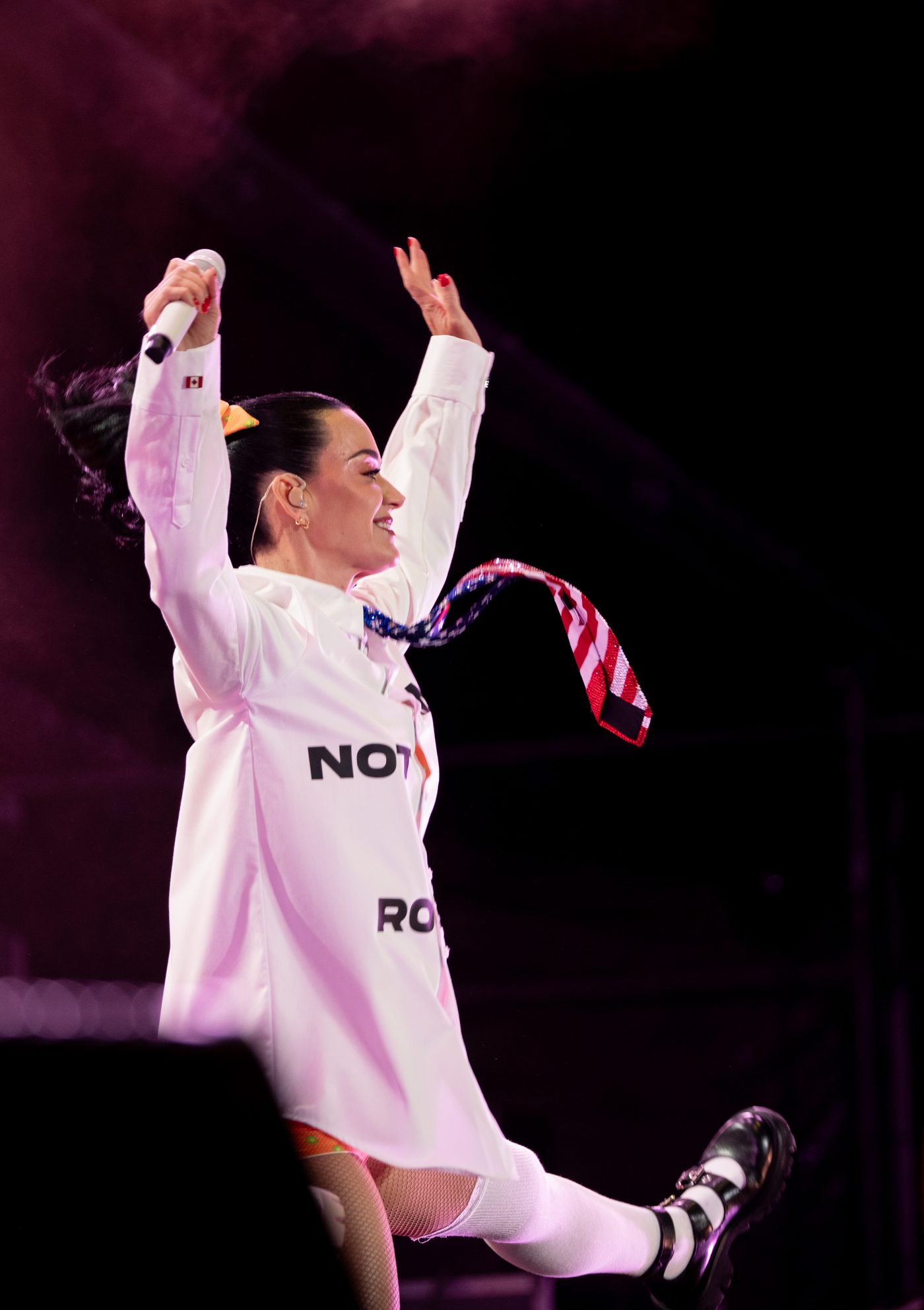

In the summer of 2019, in a federal courtroom in Los Angeles, a jury listened to two eight-note phrases back to back. One from a Grammy-nominated gospel rap record most of America never heard. The other from one of the biggest pop songs on the planet, performed at the Super Bowl. The jury said the second copied the first: $2,789,310.48, about $2.8 million.
Then the judge threw it out. Then the appeals court agreed. Perry won. It took until March 2022.
What the papers say
November 1, 2016: the third amended complaint (TAC, Nov. 1, 2016) landed in the Central District of California, naming everybody. Katheryn Elizabeth Hudson (pka Katy Perry), Jordan Houston (pka Juicy J), Lukasz Gottwald (pka Dr. Luke), Karl Martin Sandberg (pka Max Martin), Henry Russell Walter (pka Cirkut), plus Kasz Money, Capitol Records, WB Music, Kobalt Music Publishing America, Inc., Sarah Theresa Hudson, Kitty Purry Inc., UMG Recordings Inc., Universal Music Group Inc., and BMG Rights Management (US) LLC. The plaintiffs: Christian hip-hop artists Marcus Gray (pka Flame), Emanuel Lambert, and Chike Ojukwu. The claim: the repeating instrumental figure in "Dark Horse", what musicians call an ostinato, copied the ostinato in their song "Joyful Noise."
The record's best detail: Ojukwu made the original tune in 2007 on a free music website, sold it to Gray, and Gray built "Joyful Noise" around it for the 2008 album Our World Redeemed. Grammy nomination in 2009. Millions of YouTube and MySpace views. No real radio, no real commercial success.
The plaintiffs had no direct evidence of copying. Their case was access plus substantial similarity, carried by their expert musicologist's five or six points of similarity: length, rhythm, melodic content, melodic shape, timbre, and where the phrase sits in the mix.
The money
Bifurcated jury trial, July 17 to August 1, 2019. Verdict: infringement, $2,789,310.48 (about $2.8 million). Judgment entered September 11, 2019. Press reports (Missouri Lawyers Media) broke the award down by defendant, including a $132,462.36 allocation against Sarah Theresa Hudson, who was found liable alongside Perry. The plaintiffs then asked the court to add prejudgment interest on top of the award.
They collected nothing. On March 16, 2020, Judge Christina Snyder vacated the jury award and granted judgment as a matter of law to the defendants. The plaintiffs appealed. On March 10, 2022, the Ninth Circuit affirmed, in an opinion by Judge Milan D. Smith Jr. The interest motion died with the award.
The ruling
The court's words, not mine: the two ostinatos "consist entirely of commonplace musical elements," and the jury's verdict was "unsupported by the evidence."
Translation: "Dark Horse" runs 3-3-3-3-2-2-1-5 in a minor key. "Joyful Noise" runs 3-3-3-3-2-2-2-1, then 3-3-3-3-2-2-2-6. Same uniform rhythm, every note the same length. Building blocks, the court said, not property. You cannot own a descending minor-scale fragment.
The industry agreed loudly. The appellate record carries amicus briefs from the RIAA, the National Music Publishers' Association, the Motion Picture Association, 110 working songwriters and producers, and a group of musicologists. When the whole business files briefs saying do not let this verdict stand, the verdict does not stand.
The risk ledger
Perry won. Capitol won. Everybody won. The case ran from July 2014 to March 2022: nearly eight years of federal litigation over eight notes that nobody could own in the first place.
The opinions do not publish anyone's legal bills, so I will not invent a number. What the docket shows is nearly eight years of Greenberg Traurig and Mitchell Silberberg time, a two-week federal jury trial with dueling musicologists, post-trial motion practice, and a full Ninth Circuit appeal. That is not a rounding error. That is the cost of being right.
The meter runs whether you win or lose. Sit with that.
The coverage lens
This is the exact class of allegation that media liability coverage is built for: someone says your creative work infringes their rights, and you need defense counsel before you need anything else. Defense costs are a central part of what the coverage line addresses, and the defense bill is the certain bill in every case like this one. It arrives for winners and losers alike, years before anyone knows who won.
No promises here. Whether any particular claim would be covered depends on the policy as issued, its terms, conditions, limitations, and exclusions, and the facts of the claim. But the category exists because of cases like this.
The docket
- Ninth Circuit opinion, Gray v. Hudson, 28 F.4th 87 (9th Cir. 2022), filed March 10, 2022: caselaw.findlaw.com
- C.D. Cal. minutes confirming the action was filed July 1, 2014 (Justia): docs.justia.com
- Third amended complaint: cited by docket reference, TAC, Nov. 1, 2016 (C.D. Cal. No. 2:15-cv-05642)
Sources
- Ninth Circuit opinion, Gray v. Hudson, 28 F.4th 87 (9th Cir. 2022): caselaw.findlaw.com
- C.D. Cal. minutes confirming the July 1, 2014 filing: docs.justia.com
- Case background: originally filed in the Eastern District of Missouri in July 2014, transferred to the Central District of California in 2015 (E.D. Mo. No. 4:14-cv-01183; C.D. Cal. No. 2:15-cv-05642)
- Exact verdict breakdown (including the $132,462.36 Sarah Theresa Hudson allocation): press-reported (Missouri Lawyers Media)
Legal disclosure
SongSure LLC is an insurance agency. This article is for general information and education only. It is not legal advice, not insurance advice, and not an offer, quote, or promise of coverage. Case summaries are based on publicly available court records and are simplified; they may omit details. Any coverage would be subject to underwriting review, carrier approval, and the terms, conditions, limitations, and exclusions of the policy as issued. Past case outcomes do not predict future results or coverage decisions. SongSure is in pre-launch and is not currently writing coverage. Consult a licensed attorney for legal questions and a licensed insurance producer for coverage questions.