The Docket - Case No. 14
Two songs, two owners, eleven years
Sued for plagiarizing himself, John Fogerty won the copyright fight and then won the fight over who pays for it.
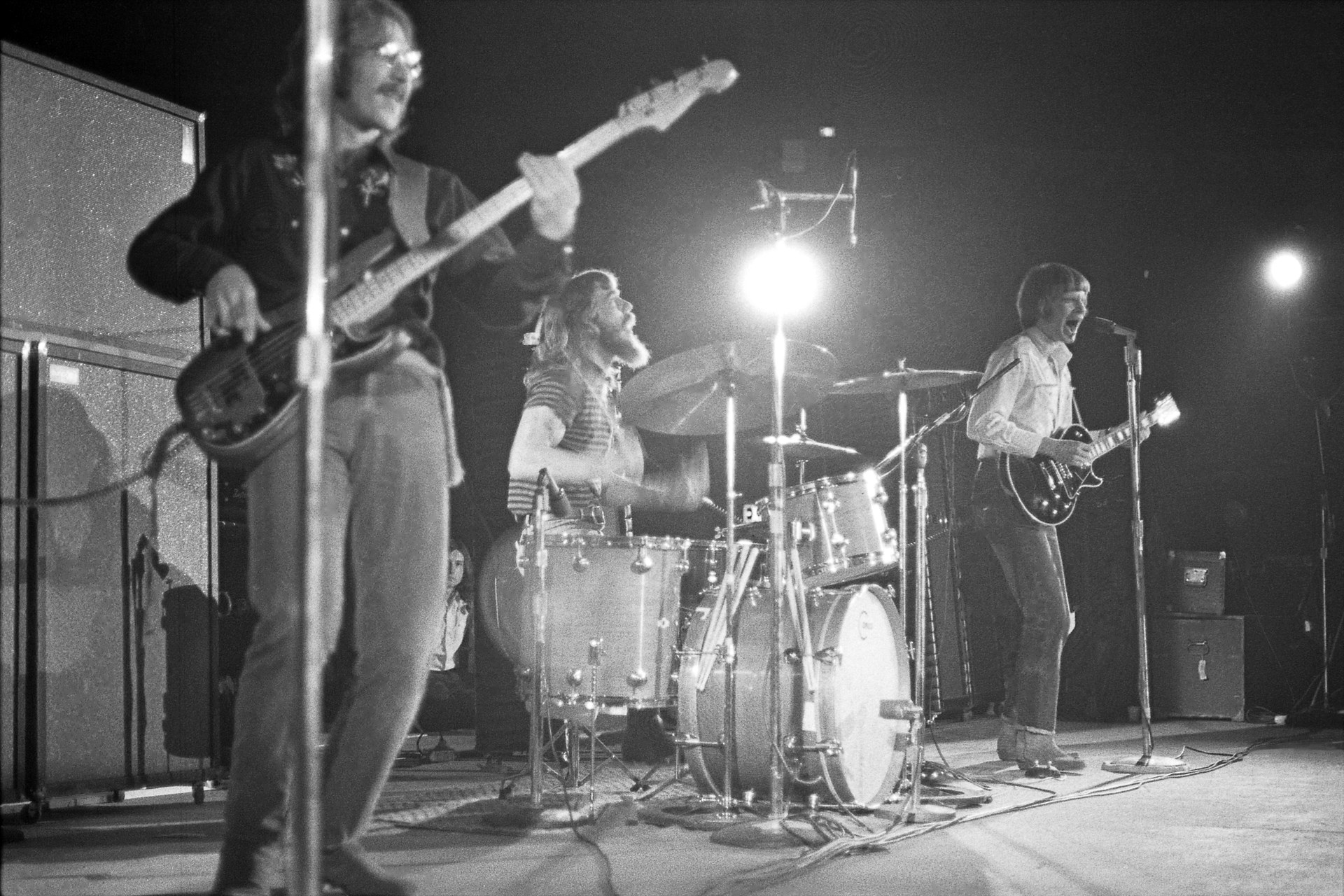
John Fogerty was sued for plagiarizing John Fogerty. That is not a joke at the docket's expense. Fantasy, Inc. owned the publishing rights to 'Run Through the Jungle,' which Fogerty wrote for Creedence Clearwater Revival in 1970, and it claimed his 1985 hit 'The Old Man Down the Road' was the same song with new words.
Fogerty won the infringement trial on November 7, 1988. Then came the fee fight — eight more years of litigation in the same action: a fee motion, a Ninth Circuit affirmance (984 F.2d 1524), a Supreme Court reversal setting an evenhanded fee standard, and a remand on which the district court finally awarded his legal bills.
What the papers say
Fantasy, Inc. — whose Saul Zaentz the Ninth Circuit describes as 'a general partner in Galaxy and later a minority shareholder and director of Fantasy' — sued Fogerty, Warner Brothers, and affiliated companies in the Northern District of California. The allegation: 'The Old Man Down the Road,' published and registered in 1985, was merely 'Run Through the Jungle' with new words. The wrinkle that made this case famous: Fogerty was accused of infringing a song he himself had written, because he had sold the exclusive publishing rights to Fantasy's predecessors-in-interest years earlier.
Fantasy also asserted state-law and Lanham Act claims, voluntarily dismissed before trial. Fogerty's counterclaims were dismissed on summary judgment. The infringement claim went to trial, and the jury returned a verdict for Fogerty. A footnote in the Supreme Court opinion adds that Fogerty had indemnified the Warner defendants and reimbursed their defense fees and costs.
After winning, Fogerty moved for attorney's fees under 17 U.S.C. 505. The district court denied the motion because Fantasy's suit was not frivolous or in bad faith, which the Ninth Circuit's then-prevailing 'dual standard' required of a prevailing defendant (prevailing plaintiffs got fees as a matter of course). The Ninth Circuit affirmed, and the Supreme Court granted certiorari to resolve a circuit split.
The money
On remand, the district court awarded Fogerty $1,347,519.15 in attorney's fees, after reviewing extensive billing records, and the Ninth Circuit affirmed in Fantasy, Inc. v. Fogerty, 94 F.3d 553 (9th Cir. 1996). Fogerty also sought interest for the lost use of the money paid to his lawyers over the years; the district court declined, and the Ninth Circuit affirmed that refusal.
No damages were awarded at the underlying trial, since Fogerty was the defendant and won. The cost of defending the Warner defendants under his indemnity agreement is not broken out in the opinions.
The ruling
The holding: prevailing plaintiffs and prevailing defendants must be treated alike under 17 U.S.C. 505; attorney's fees are awarded to prevailing parties only as a matter of the court's discretion. The Court's words: 'Prevailing plaintiffs and prevailing defendants must be treated alike under section 505; attorney's fees are to be awarded to prevailing parties only as a matter of the court's discretion.'
Translation: the Court rejected both Fantasy's 'dual standard' and Fogerty's proposed 'British Rule' of automatic loser-pays. The word 'may' in section 505 signals discretion, exercised in light of equitable considerations such as whether the prevailing party's victory furthered the Copyright Act's purposes. Chief Justice Rehnquist wrote the opinion; Justice Thomas concurred in the judgment.
On remand, the district court awarded the $1,347,519.15 on the ground that Fogerty's win vindicated his, and other artists', right to keep composing in the distinctive 'swamp rock' style and furthered the Act's purposes, even though Fantasy was 'faultless' in bringing the suit. The Ninth Circuit affirmed, holding that a plaintiff's culpability is not a prerequisite for fee awards to prevailing defendants.
The risk ledger
The case ran eleven years: sued in 1985, final fee affirmance in 1996. Winning on the merits was only the halfway point. Fogerty then had to litigate to the Supreme Court and back to the Ninth Circuit just to recover his lawyers' bills, and the award was roughly $1.35 million even though the court found no blameworthy behavior by Fantasy, a 'faultless' plaintiff.
The opinions do not publish either side's actual legal bills, so this article will not invent one. The $1,347,519.15 figure is a court-determined fee award, not a bill. What the docket shows is eleven years of federal litigation, and a winner who had to finance eight more years of post-judgment fee litigation in the same case to get paid for the first.
The meter runs whether you win or lose. Sit with that.
The coverage lens
This is the exact class of allegation that media liability coverage is built for: a copyright claim over a released work, brought by a party holding a piece of paper that says the work belongs to them, against the artist who created it. This case proves the point twice over: first Fogerty had to pay to defend the infringement claim, then he had to pay to recover the cost of defending it. Defense costs are a central part of what the coverage line addresses, and the defense bill is the certain bill in every case like this one. It arrives for winners and losers alike, years before anyone knows who won.
No promises here. Whether any particular claim would be covered depends on the policy as issued, its terms, conditions, limitations, and exclusions, and the facts of the claim. But the category exists because of cases like this.
Sources
- Fogerty v. Fantasy, Inc., 510 U.S. 517 (1994) — U.S. Reports (GovInfo): govinfo.gov
- Fantasy, Inc. v. Fogerty, 984 F.2d 1524 (9th Cir. 1993) — fee-denial affirmance (Caselaw Access Project): static.case.law
- Fantasy, Inc. v. Fogerty, 94 F.3d 553 (9th Cir. 1996) — remand fee-award affirmance (Justia): law.justia.com
- Fee award order on remand, Fantasy, Inc. v. Fogerty, N.D. Cal. — $1,347,519.15 in attorney's fees, affirmed at 94 F.3d 553 (the opinions cite no standalone docket number for the order itself)
Legal disclosure
SongSure LLC is an insurance agency. This article is for general information and education only. It is not legal advice, not insurance advice, and not an offer, quote, or promise of coverage. Case summaries are based on publicly available court records and are simplified; they may omit details. Any coverage would be subject to underwriting review, carrier approval, and the terms, conditions, limitations, and exclusions of the policy as issued. Past case outcomes do not predict future results or coverage decisions. SongSure is in pre-launch and is not currently writing coverage. Consult a licensed attorney for legal questions and a licensed insurance producer for coverage questions.