The Docket - Case No. 5
Three notes, $1,599,987, twenty years
George Harrison never meant to copy a thing. The court believed him. He lost anyway.
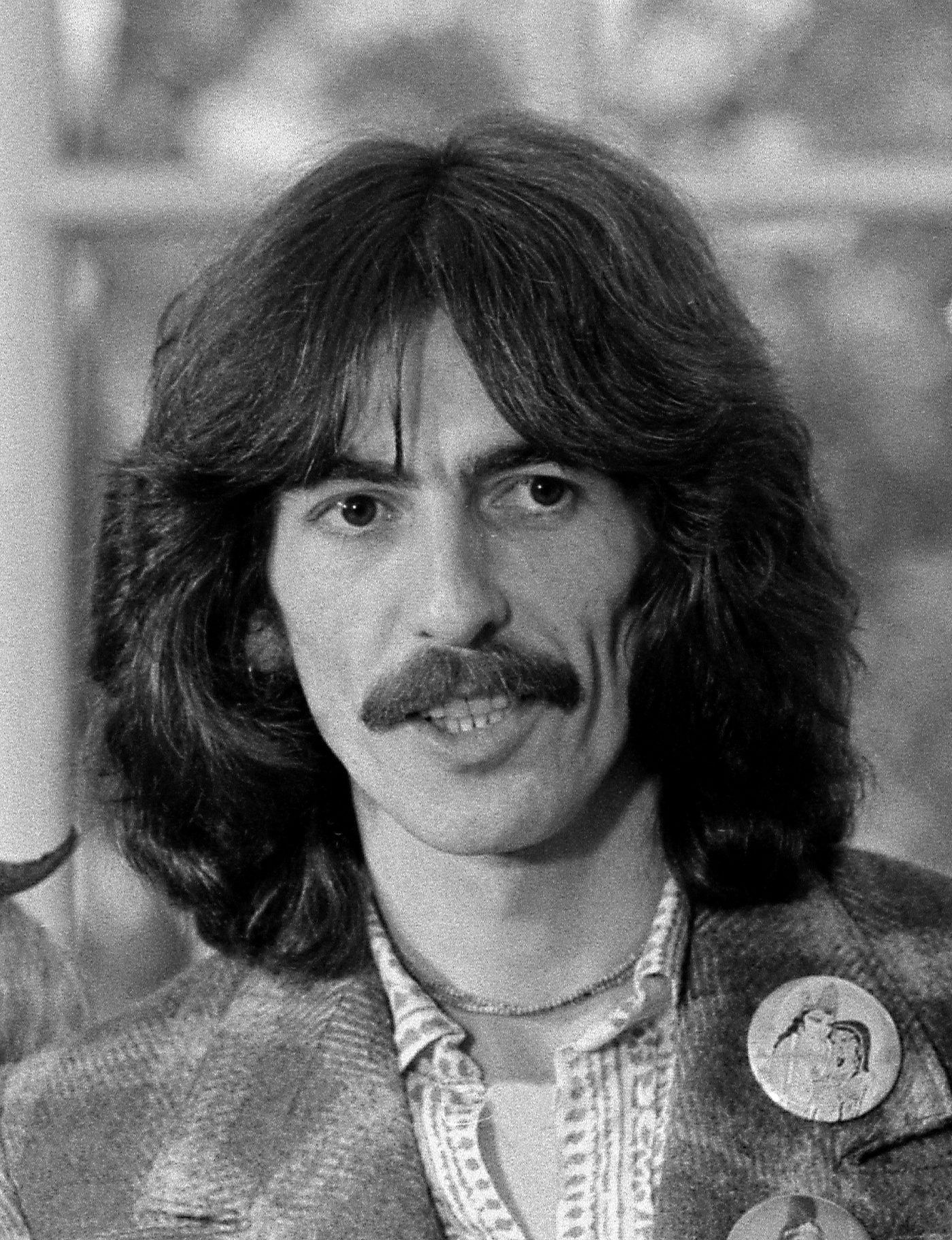

Copenhagen. A singing engagement. Downstairs a press conference drones on; upstairs George Harrison slips away with a guitar and starts vamping two chords, fitting "Hallelujah" and "Hare Krishna" over them every way. Somewhere in that vamping, three notes surface: sol, mi, re. They please him. A week later, in a London studio, Billy Preston cuts them into a record, and "My Sweet Lord" becomes one of the biggest songs in the world.
The problem: those three notes had already worked, carrying a girl-group record called "He's So Fine" to number one for five weeks in 1963. Harrison's subconscious knew what his conscious mind did not remember, the judge wrote. The damages number the court eventually calculated: $1,599,987.
What the papers say
Bright Tunes Music Corp., owner of the copyright in Ronald Mack's "He's So Fine," sued Harrisongs Music, Ltd., George Harrison, Apple Records, Broadcast Music, Inc., and Hansen Publications. The claim: "My Sweet Lord," listing Harrison as composer, plagiarized "He's So Fine."
Harrison's story, taken by the court at face value, is the Copenhagen session: vamping chords, Preston as principal musician, motifs A and B emerging "under circumstances that Harrison was utterly unable to recall." Forty pages of transcript in colloquy with him, and the court concluded neither man was conscious of using the "He's So Fine" theme.
The record's best details are small ones. In the second repetition of motif B, both songs carry an identical grace note: "sol-la-do-la-re-do." And when Harrison later recorded the song himself, he quietly omitted that grace note, not just from the recording but from the printed sheet music. Legally insignificant, the court says. Draw your own conclusions.
The money
"My Sweet Lord" earned from four sources: mechanical royalties ($646,601), performance royalties (BMI: $359,794), sheet music ($67,675), and Apple's manufacturing "spread" ($1,077,958, apportioned by BMI airplay monitoring). Gross earnings: $2,152,028.
Minus $18,712 in commissions (20 percent to ABKCO, 3.25 percent to the Harry Fox Agency): $2,133,316. Then the judgment call: three-fourths of the song's success belonged to the plagiarized tune, one-fourth to Harrison's words and star power. Three-fourths of $2,133,316 is $1,599,987. A footnote adds that deliberate plagiarism would have cost him the entire earnings.
Then the turn. Before the damages hearing, Bright Tunes sold the copyright and the litigation to ABKCO Music, Allen Klein's company, for $587,000. Klein had been Harrison's own business manager from 1970 to 1973, and in late 1975 and early 1976 he covertly intruded into Harrison's settlement talks, floating a $100,000 call offer — with a $160,000 kicker on a favorable liability result, for worldwide stock — that Bright Tunes read as an insider's valuation of the case. The court held this breached ABKCO's fiduciary duty, so ABKCO could not collect the $1,599,987. It held everything in a constructive trust for Harrison, transferable to him upon payment of the purchase price plus interest — which the district court on remand set at $270,020 plus interest ($316,980 of the trust allocated to foreign rights), an allocation the 1991 appeal litigated. Claims against BMI and Hansen Publications: dismissed.
The ruling
Access was proven (five weeks at No. 1 in the U.S., seven weeks a top hit in England; Harrison admitted hearing the song). The verdict line: "My Sweet Lord is the very same song as He's So Fine with different words." The court said it did not believe Harrison copied deliberately, then found him liable anyway, because subconscious copying is still copying when access and substantial similarity are both established. The Second Circuit affirmed liability and the fiduciary-duty finding in 1983 (modifying the trust and remanding); the 1991 appeal (944 F.2d 971) decided the follow-on fights over the trust's scope and value.
The risk ledger
Twenty years. Filed in 1971, final appellate word in 1991: a three-day liability trial in 1976, an eight-day damages trial in 1979, three trips to the Second Circuit — 722 F.2d 988 (1983), 841 F.2d 494 (1988, per curiam — appeal dismissed, no final appealable decision), and 944 F.2d 971 (1991) — and Harrison's own former business manager buying the other side of the lawsuit mid-case.
The opinions never state anyone's legal bills, so I will not invent a number. The caption pages show the meter: Pryor, Cashman & Sherman for the plaintiff; Hardee, Barovick, Konecky & Braun, then Santora, Shenkman & Kushel, for Harrison; Cleary, Gottlieb for Apple; separate counsel for BMI and Hansen Publications. Two bench trials, dueling musicologists, and appeals still running, in the Second Circuit's own words, "over 15 years later."
The meter runs whether you win or lose. Harrison never even won the argument: the court believed his account completely and still ruled against him. Sit with that. Innocent intent does not shrink the defense bill.
The coverage lens
This is the class of allegation media liability and errors-and-omissions coverage is built for: someone says your creative work infringes their rights, and the fight starts years before anyone decides who is right. The defense bill is the certain bill in cases like this one, arriving for the deliberate infringer and the subconscious one alike.
No promises here. Whether any particular claim would be covered depends on the policy as issued, its terms, conditions, limitations, and exclusions, and the facts of the claim. The category exists because of cases like this: three notes, absorbed from a record that had spent five weeks at No. 1 some seven years earlier, surfacing uninvited in a dressing room in Copenhagen.
The docket
- 420 F. Supp. 177 (S.D.N.Y. Aug. 31, 1976), liability opinion: law.justia.com
- 508 F. Supp. 798 (S.D.N.Y. Feb. 19, 1981), damages opinion ($1,599,987; ABKCO breach; $587,000 trust): law.justia.com
- 722 F.2d 988 (2d Cir. Nov. 3, 1983), affirming liability, modifying the trust over foreign rights: law.justia.com
- 841 F.2d 494 (2d Cir. Mar. 10, 1988), per curiam — appeal and cross-appeal dismissed for lack of appellate jurisdiction (no final appealable decision): law.justia.com
- 944 F.2d 971 (2d Cir. 1991), deciding the follow-on disputes over the constructive trust's scope and value: law.justia.com
Sources
- 420 F. Supp. 177 (S.D.N.Y. 1976), liability opinion: law.justia.com
- 508 F. Supp. 798 (S.D.N.Y. 1981), damages opinion ($1,599,987; ABKCO fiduciary breach; constructive trust): law.justia.com
- 722 F.2d 988 (2d Cir. 1983), affirming liability and the fiduciary-duty finding, modifying the trust and remanding: law.justia.com
- 841 F.2d 494 (2d Cir. 1988), per curiam (appeal dismissed; cited by reporter): law.justia.com
- 944 F.2d 971 (2d Cir. 1991), deciding the trust's scope and value — including the $270,020 plus interest payment for the rights not affected by settlement ($316,980 of the trust allocated to foreign rights): law.justia.com
Legal disclosure
SongSure LLC is an insurance agency. This article is for general information and education only. It is not legal advice, not insurance advice, and not an offer, quote, or promise of coverage. Case summaries are based on publicly available court records and are simplified; they may omit details. Any coverage would be subject to underwriting review, carrier approval, and the terms, conditions, limitations, and exclusions of the policy as issued. Past case outcomes do not predict future results or coverage decisions. SongSure is in pre-launch and is not currently writing coverage. Consult a licensed attorney for legal questions and a licensed insurance producer for coverage questions.