The Docket - Case No. 15
One screenplay, two generations, three years back
Eighteen years after renewing her father's screenplay, Paula Petrella sued MGM, and the Supreme Court ruled the only clock that mattered ran three years back.
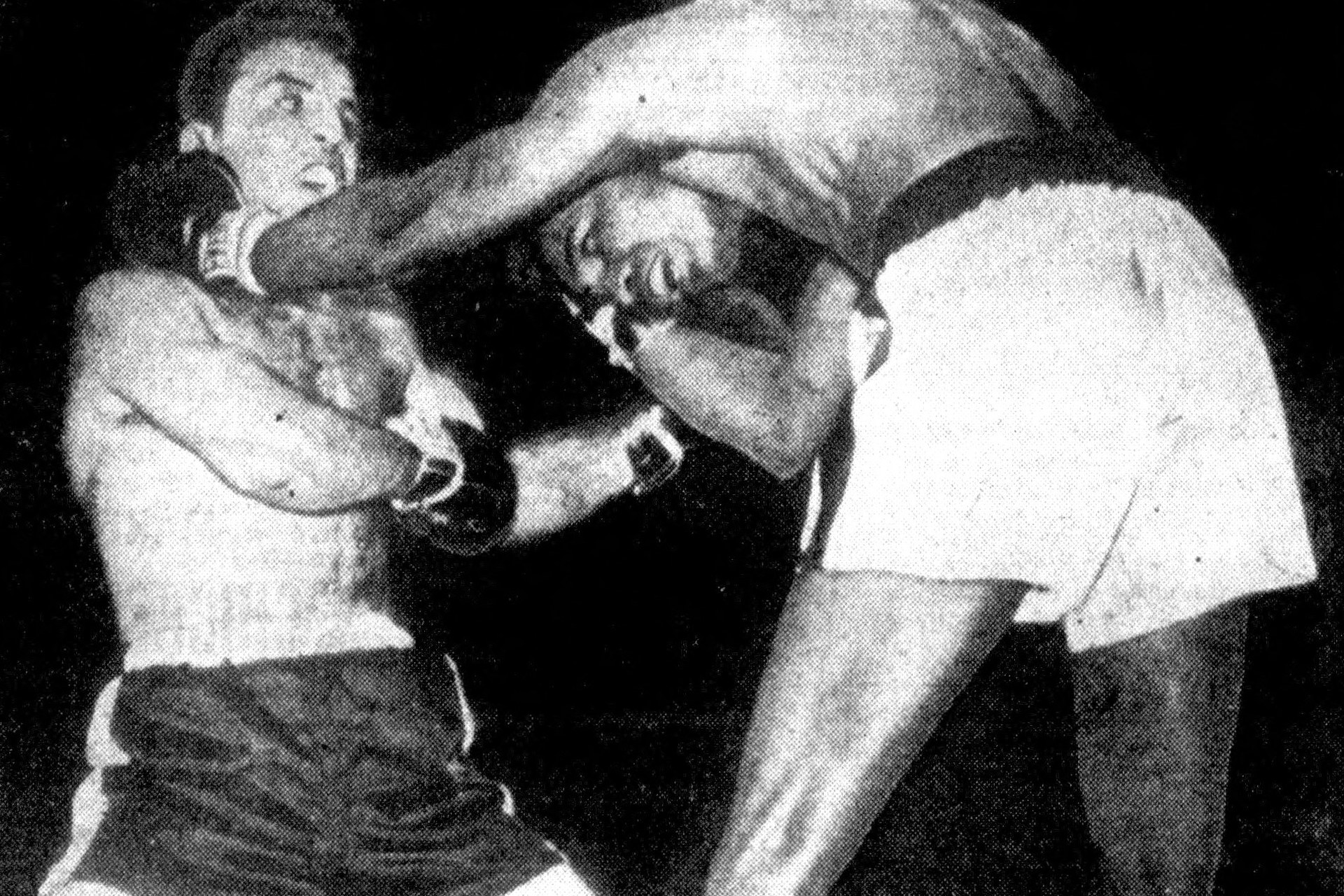
Paula Petrella waited eighteen years after renewing her father's screenplay copyright to sue MGM over 'Raging Bull.' MGM said the wait itself was the defense: laches, the doctrine that punishes unreasonable delay. On May 19, 2014, the Supreme Court said 6-3 that the only clock that mattered ran three years back, with two qualifications for equitable relief and remedies, detailed below.
According to press reports, the parties settled confidentially in April 2015. The legal rule the decision left behind has been read as reaching every copyright owner thinking about suing late, subject to the qualifications the Court added.
What the papers say
Frank Petrella wrote two screenplays (registered 1963 and 1973) and a book (1970) about boxer Jake LaMotta in collaboration with LaMotta; the 1963 copyright registration listed Frank Petrella as sole author, noting the collaboration with LaMotta. In 1976, Frank Petrella and LaMotta assigned all rights, including renewal rights, to Chartoff-Winkler Productions. In 1978, United Artists Corporation, an MGM subsidiary, acquired the motion picture rights 'exclusiv[e] and forever, including all periods of copyright and renewals and extensions thereof.' MGM released 'Raging Bull' in 1980, directed by Martin Scorsese and starring Robert De Niro, who won the Best Actor Academy Award.
Frank Petrella died in 1981, during the initial copyright terms. Under Stewart v. Abend, 495 U.S. 207 (1990), an author who assigned renewal rights but died before the renewal period leaves the assignee with no right to keep producing the derivative work unless the author's successor transfers the renewal rights. The renewal rights reverted to his heirs. Paula Petrella, his daughter, learned of the decision, hired an attorney, and in 1991 renewed the copyright in the 1963 screenplay, becoming its sole owner. The 1973 screenplay and the 1970 book were not timely renewed, so the claims rested exclusively on the 1963 screenplay.
In 1998, her attorney informed MGM that exploiting 'Raging Bull' infringed her copyright. Counsel exchanged letters for two years; MGM denied the claims. On January 6, 2009, Petrella filed suit in the Central District of California, seeking monetary and injunctive relief only for acts on or after January 6, 2006, inside section 507(b)'s three-year limitations period. The district court found disputed fact issues on infringement but granted MGM summary judgment on laches. The Ninth Circuit affirmed, with Judge Fletcher concurring only because circuit precedent required it, calling laches in copyright 'entirely a judicial creation.' The Supreme Court granted certiorari to resolve a circuit split.
The money
No dollar figures appear in the Supreme Court opinion itself, and no demand figure is confirmed in any court filing, so this article reports none. According to press reports, MGM and Petrella reached a confidential settlement in April 2015; the terms were never disclosed. No verdict, no published award.
The ruling
The holding: laches cannot be invoked to preclude adjudication of a claim for damages brought within the three-year limitations window of 17 U.S.C. 507(b). The Court's words: 'To the extent that an infringement suit seeks relief solely for conduct occurring within the limitations period... courts are not at liberty to jettison Congress' judgment on the timeliness of suit. Laches, we hold, cannot be invoked to preclude adjudication of a claim for damages brought within the three-year window.'
Translation: each infringing act starts its own three-year period (the separate-accrual rule), and Congress prescribed the three-year lookback back in 1957 to replace borrowed state statutes. Justice Ginsburg wrote for a 6-3 majority; Justice Breyer dissented, joined by Chief Justice Roberts and Justice Kennedy. The Court added two qualifications: laches may bar equitable relief at the threshold in 'extraordinary circumstances,' and a plaintiff's delay can always factor into remedies like injunctive relief and accounting of profits.
On remand the case never reached a jury; according to press reports, the parties settled in April 2015. The decision has been read by some commentators as encouragement for long-delayed suits, including the 'Stairway to Heaven' case, filed May 31, 2014.
The risk ledger
The claim spanned roughly twenty-four years, from the 1991 renewal to the 2015 settlement, with six years of active litigation (2009-2015) plus the Supreme Court trip. The cost-of-being-right angle cuts both ways: an heir sat on a known claim for eighteen years and the case still survived to a Supreme Court decision, six years of federal litigation, and, according to press reports, a confidential settlement, while the studio's reliance on the passage of time, millions invested in exploiting the film, fading memories, a dead co-author, was not enough to win dismissal at the door.
The opinions do not publish either side's legal bills, so this article will not invent one. What the docket shows is a studio budgeting for six years of federal litigation, a Supreme Court argument, and a confidential settlement, without ever seeing a verdict.
The meter runs whether you win or lose. Sit with that.
The coverage lens
This is the exact class of allegation that media liability coverage is built for: a decades-old work, rights that quietly revert through an obscure corner of the Copyright Act, and a claim that arrives long after everyone assumed the matter was settled. A studio can budget for six years of federal litigation without ever seeing a verdict. Defense costs are a central part of what the coverage line addresses, and the defense bill is the certain bill in every case like this one. It arrives for winners and losers alike, years before anyone knows who won.
No promises here. Whether any particular claim would be covered depends on the policy as issued, its terms, conditions, limitations, and exclusions, and the facts of the claim. But the category exists because of cases like this.
The docket
- Full opinion, 572 U.S. 663 (Justia): supreme.justia.com
- Full opinion (Cornell LII): law.cornell.edu
- Settlement report (The A.V. Club, citing Deadline): avclub.com
- Settlement report (Lexology, press): lexology.com
Sources
- Supreme Court of the United States, Petrella v. Metro-Goldwyn-Mayer, Inc., 572 U.S. 663 (2014) — full opinion: supreme.justia.com
- The A.V. Club (press report), citing Deadline — settlement coverage: avclub.com
- Lexology (press report) — settlement coverage: lexology.com
- Court order noting the 'Stairway to Heaven' filing date of May 31, 2014 (via George Washington University): court order (PDF)
Legal disclosure
SongSure LLC is an insurance agency. This article is for general information and education only. It is not legal advice, not insurance advice, and not an offer, quote, or promise of coverage. Case summaries are based on publicly available court records and are simplified; they may omit details. Any coverage would be subject to underwriting review, carrier approval, and the terms, conditions, limitations, and exclusions of the policy as issued. Past case outcomes do not predict future results or coverage decisions. SongSure is in pre-launch and is not currently writing coverage. Consult a licensed attorney for legal questions and a licensed insurance producer for coverage questions.