The Docket - Case No. 18
One melody, two writers, six years
A Chicago songwriter wins a jury verdict against the Bee Gees, then loses it to a judge's pen: striking similarity may permit an inference of access, but only with some minimum threshold of proof that the inference is reasonable.
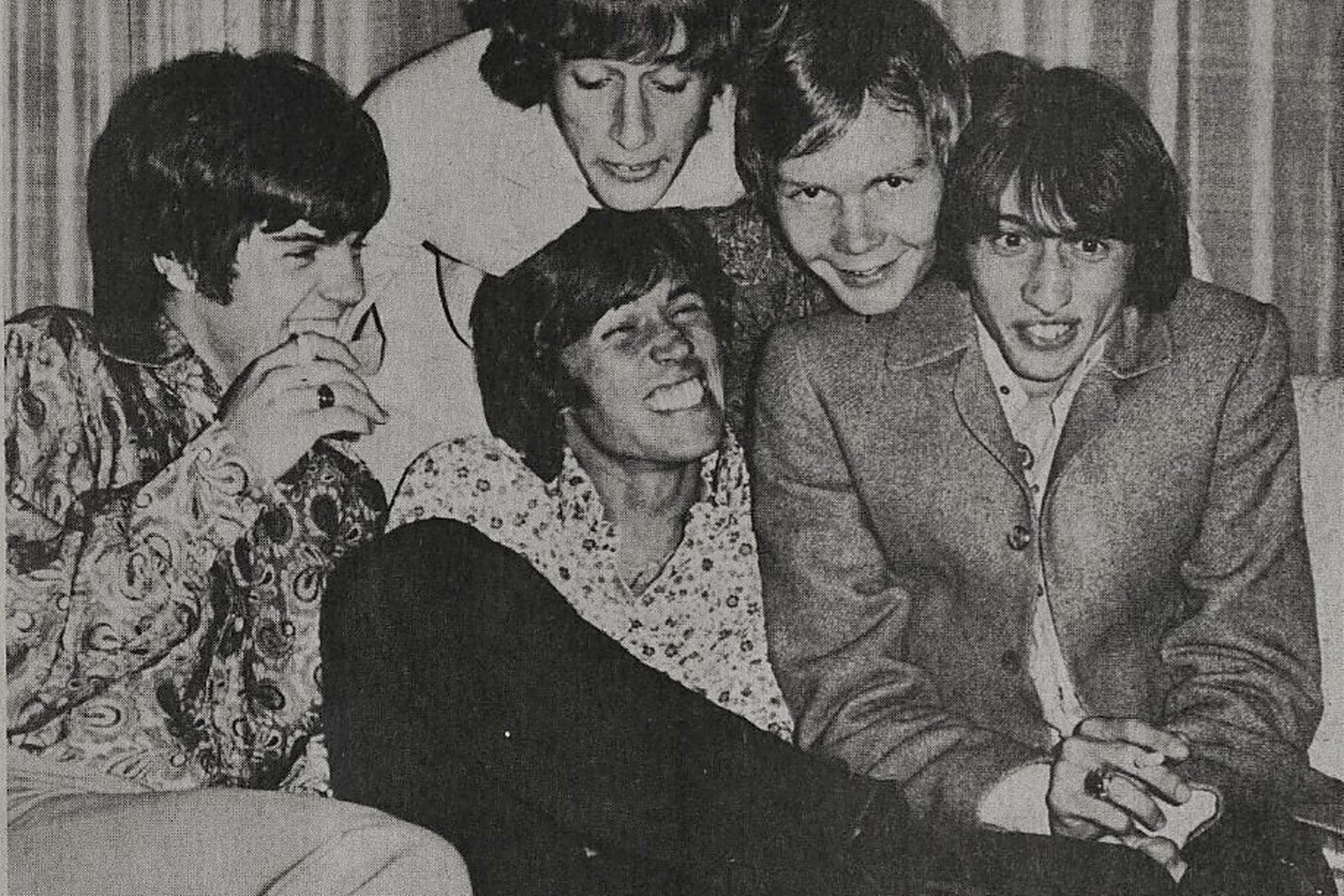
In early 1983, in a federal courtroom in Chicago, a jury decided that the Bee Gees' 'How Deep Is Your Love' copied Ronald Selle's 'Let It End.' Selle was a part-time musician who said he wrote his song in a single day in the fall of 1975. He had won. Then, in the spring of 1983, Judge George N. Leighton threw the verdict out. Then the Seventh Circuit agreed. The Bee Gees won. About six years after the complaint was filed, and nearly nine after the song was written in a day, the case was over.
This is the rare copyright case where the losing side at trial is the one with the famous name, and the famous name still ends up paying for the whole ride.
What the papers say
The plaintiff was Ronald H. Selle, a Chicago songwriter. The defendants were Barry, Robin, and Maurice Gibb, their company Brothers Gibb B.V., Phonodisc, Inc. (Polygram Distribution, Inc.), and Paramount Pictures Corp., which had distributed Saturday Night Fever, the film whose soundtrack carried 'How Deep Is Your Love' to the top of the world.
Selle's song had what the Seventh Circuit called 'virtually de minimis' public dissemination. He performed it two or three times in the Chicago area and sent tapes and lead sheets to eleven music publishers. Eight returned them. Three never answered. He did not hear the Bee Gees' song until May 1978, about eight months after its September 1977 release.
The record's best detail: Selle's case rested almost entirely on one man, Arrand Parsons, a Northwestern University music professor. Parsons testified that the two songs 'had such striking similarities that they could not have been written independent of one another,' while declining to say that copying was the only possible explanation. On the other side, the Bee Gees introduced a work tape documenting the song's actual creation in the January 1977 France sessions, backed by testimony from Barry Gibb, keyboardist Blue Weaver, manager Dick Ashby, and producer Albhy Galuten. Selle never impeached or contradicted any of it.
The money
There is none. The trial was bifurcated on liability only, so damages were never reached. No damages were awarded, and no settlement figures appear in the record. Neither the district nor the appellate opinion publishes a single dollar amount, so this article publishes none.
The ruling
The Seventh Circuit affirmed the judgment notwithstanding the verdict, and the reason is the sentence every songwriter's lawyer should be able to recite: 'Although proof of striking similarity may permit an inference of access, the plaintiff must still meet some minimum threshold of proof which demonstrates that the inference of access is reasonable.' A bare possibility of access cannot carry the case.
Translation: striking similarity means similarity 'which reasonably precludes the possibility of any explanation other than that of copying.' Selle's expert ruled out independent creation but never ruled out coincidence or a common source, and never addressed the Bee Gees' own earlier compositions, which the defense introduced alongside The Beatles' 'From Me To You'. The court found the inferences Selle relied on were 'at war with the undisputed facts.'
So the standard stands where it stood: you can win a jury and still need to have proved that the other side could reasonably have heard your song. Proof of striking similarity may permit an inference of access, but the plaintiff must still meet some minimum threshold of proof that the inference of access is reasonable. Similarity alone does not carry the case.
The risk ledger
The song was written in the fall of 1975 and was nearly nine years old when the Seventh Circuit ruled. The case itself, from the 1978 complaint (No. 78 C 3656) to the July 23, 1984 appellate opinion, ran about six years, to establish that nothing was taken.
The opinions do not publish anyone's legal bills, so this article will not invent one. What the docket shows is a federal jury trial with dueling testimony about the song's creation, post-trial motion practice, and a full Seventh Circuit appeal, and then the appellate court ordering each side to bear its own costs. Each side presumably bore its own costs — the opinions publish no fee figures — and the ledger stands: Selle ended with nothing; the Bee Gees ended with vindication.
The meter runs whether you win or lose. Sit with that.
The coverage lens
This is the exact class of allegation that media liability coverage is built for: someone says your creative work infringes their rights, and you need defense counsel before you need anything else. Defense costs are a central part of what the coverage line addresses, and the defense bill is the certain bill in every case like this one. It arrives for winners and losers alike, years before anyone knows who won.
No promises here. Whether any particular claim would be covered depends on the policy as issued, its terms, conditions, limitations, and exclusions, and the facts of the claim. But the category exists because of cases like this.
The docket
- U.S. Court of Appeals for the Seventh Circuit, Selle v. Gibb, 741 F.2d 896, decided July 23, 1984 (opinion by Judge Cudahy): law.justia.com
- GWU Music Copyright Infringement Resource, Selle v. Gibb case page with commentary: blogs.law.gwu.edu
- U.S. District Court for the Northern District of Illinois, Selle v. Gibb, 567 F. Supp. 1173, opinion dated July 8, 1983 (Judge Leighton): law.justia.com
Sources
- U.S. Court of Appeals for the Seventh Circuit, Selle v. Gibb, 741 F.2d 896 (7th Cir. 1984), Judge Cudahy — full opinion: law.justia.com
- U.S. District Court for the Northern District of Illinois, Selle v. Gibb, 567 F. Supp. 1173 (N.D. Ill. 1983), Judge Leighton, opinion dated July 8, 1983: law.justia.com
- Discogs (discography source) — 'How Deep Is Your Love' single release, September 1977: discogs.com
Legal disclosure
SongSure LLC is an insurance agency. This article is for general information and education only. It is not legal advice, not insurance advice, and not an offer, quote, or promise of coverage. Case summaries are based on publicly available court records and are simplified; they may omit details. Any coverage would be subject to underwriting review, carrier approval, and the terms, conditions, limitations, and exclusions of the policy as issued. Past case outcomes do not predict future results or coverage decisions. SongSure is in pre-launch and is not currently writing coverage. Consult a licensed attorney for legal questions and a licensed insurance producer for coverage questions.