The Docket - Case No. 3
One page, $12 million, six years
Led Zeppelin won the "Stairway to Heaven" lawsuit. The victory came with Warner/Chappell's claimed $613,471 lodestar, which no court would make anyone else pay.
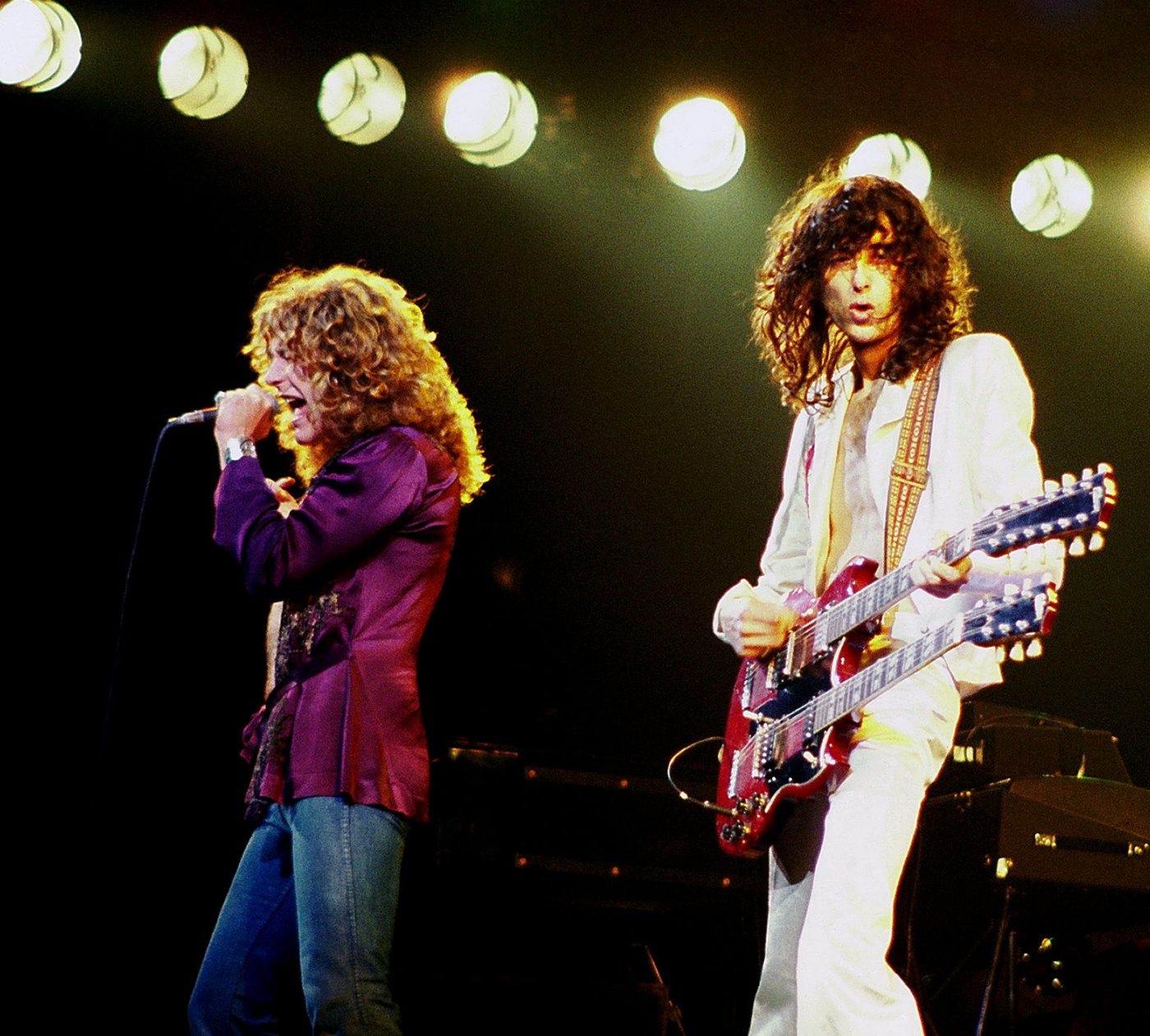

In June 2016, in a Los Angeles courtroom, Jimmy Page testifies. Each side got ten hours. Page says he owns a copy of Spirit's debut album; he cannot say when he got it. The jury returns three answers: Skidmore owns a valid copyright in "Taurus"; Led Zeppelin had access to it; the two songs are not substantially similar.
Defense verdict. Nothing owed. Then the winners file their own bill: $613,471. The court says no.
What the papers say
The caption: Michael Skidmore, as trustee for the Randy Craig Wolfe Trust, against Led Zeppelin, Page, Plant, John Paul Jones, Super Hype Publishing, Warner Music Group, Warner/Chappell Music, Atlantic Recording Corporation, and Rhino Entertainment Company. Claims: direct, contributory, and vicarious infringement, plus "Right of Attribution: Equitable Relief: Falsification of Rock n' Roll History." The district court could not locate a cognizable claim for that theory. Dismissed. John Paul Jones, Super Hype Publishing, and Warner Music Group were dismissed at summary judgment before trial.
From the opinions: Randy Wolfe wrote "Taurus" in 1966 or 1967; that December, his publisher registered the unpublished composition and deposited one page of sheet music. Wolfe died in 1997, and his rights passed through a trust to Michael Skidmore. Immediately after the Supreme Court's Petrella decision barred laches as a defense to ongoing infringement, the trust sued.
The ask: $12 million or co-ownership of the copyright for its full term, plus an injunction and destruction of every recording and sheet music copy (per the defense's fee filing).
The money
Verdict for the defendants, June 23, 2016 (per press reports). Award: $0. The court had already ruled that Skidmore could recover only half of any damages. Half of nothing is nothing.
Then the bill. Warner/Chappell, which carried the defense, moved for $613,471 in fees — its own claimed lodestar, excluding the individual defendants' separate counsel: $587,411 for lead counsel plus $9,750 and $16,310 for two others, built from 1,809.40 hours between August 2014 and June 30, 2016. The hours bought 40,000-plus pages of documents, depositions in London, Boston, and Memphis, seventeen motions in limine, and trial. Preparing the fee papers themselves cost an additional $12,718 on top of that $613,471 total.
Denied: the suit was not frivolous. The en banc court affirmed. The fee denial meant no court ordered the plaintiff to reimburse them.
The ruling
Two holdings, and one rewrote circuit law.
First, the deposit copy: "Taurus" was registered in 1967 as an unpublished work, so the 1909 Copyright Act governed, and the single deposited page defined the entire copyright. The recordings stayed out of the similarity question; they held embellishments never in the registered work.
Second, the inverse ratio rule, which let strong proof of access lower the bar for similarity. The en banc court: "we take this opportunity to abrogate the rule in the Ninth Circuit and overrule our prior cases to the contrary." Translation: the doctrine had no statutory basis, so it is gone.
The court affirmed the judgment and the fee denial.
The risk ledger
About six years, May 2014 to March 2020. The defense won in June 2016, then watched a three-judge panel vacate the win and order a brand-new trial in September 2018. It took an eleven-judge en banc rehearing to end it in March 2020.
The opinions publish no total for the whole fight. The docket shows $613,471 through the verdict, unrecovered, plus nearly four years of unquantified appellate litigation. That is the documented price of being right.
The meter runs whether you win or lose. Sit with that.
The coverage lens
This is the class of allegation media liability coverage is built for: someone says your work infringes, and you need defense counsel before anyone knows who is right. The defense bill is the certain bill. It arrived for the winners, in full, and no court ordered anyone else to pay it.
No promises here. Whether any particular claim would be covered depends on the policy as issued, its terms, conditions, limitations, and exclusions, and the facts of the claim.
The docket
- En banc opinion, No. 16-56057, filed March 9, 2020 (952 F.3d 1051), full slip-opinion text: aboutblaw.com
- Justia's page for the en banc decision: law.justia.com
- Ninth Circuit panel opinion, filed September 28, 2018, vacating in part and remanding for a new trial (later reheard en banc): metnews.com
- C.D. Cal. summary judgment order, No. 2:15-cv-03462-RGK-AGR (the 50% recovery cap; the deposit copy as the copyrighted work): bpb-us-w2.wpmucdn.com
- Warner/Chappell's fee motion memorandum, Document 293-1, filed July 7, 2016 (the $12 million demand, the 1,809.40 hours, the $613,471 lodestar): brandprotectionblog.lexblogplatformthree.com
- Order granting en banc rehearing, June 10, 2019: musicbiz.org
- GWU Music Copyright Infringement Resource case page, linking the complaint and filings: blogs.law.gwu.edu
Sources
- Skidmore v. Led Zeppelin, 952 F.3d 1051 (9th Cir. 2020) (en banc), full slip-opinion text: aboutblaw.com
- Ninth Circuit panel opinion, No. 16-56057, filed September 28, 2018 (PDF): metnews.com
- Warner/Chappell's memorandum in support of its motion for attorney's fees, Doc. 293-1, filed July 7, 2016 (the $12 million demand, the 1,809.40 hours, the $613,471 lodestar, and the $12,718 fee-on-fees) (PDF): brandprotectionblog.lexblogplatformthree.com
Legal disclosure
SongSure LLC is an insurance agency. This article is for general information and education only. It is not legal advice, not insurance advice, and not an offer, quote, or promise of coverage. Case summaries are based on publicly available court records and are simplified; they may omit details. Any coverage would be subject to underwriting review, carrier approval, and the terms, conditions, limitations, and exclusions of the policy as issued. Past case outcomes do not predict future results or coverage decisions. SongSure is in pre-launch and is not currently writing coverage. Consult a licensed attorney for legal questions and a licensed insurance producer for coverage questions.