The Docket - Case No. 4
Two lawsuits, four chords, and a nine-figure demand
Ed Sheeran beat both "Thinking Out Loud" lawsuits. The SAS case still ran from 2018 to a Supreme Court denial in 2025.
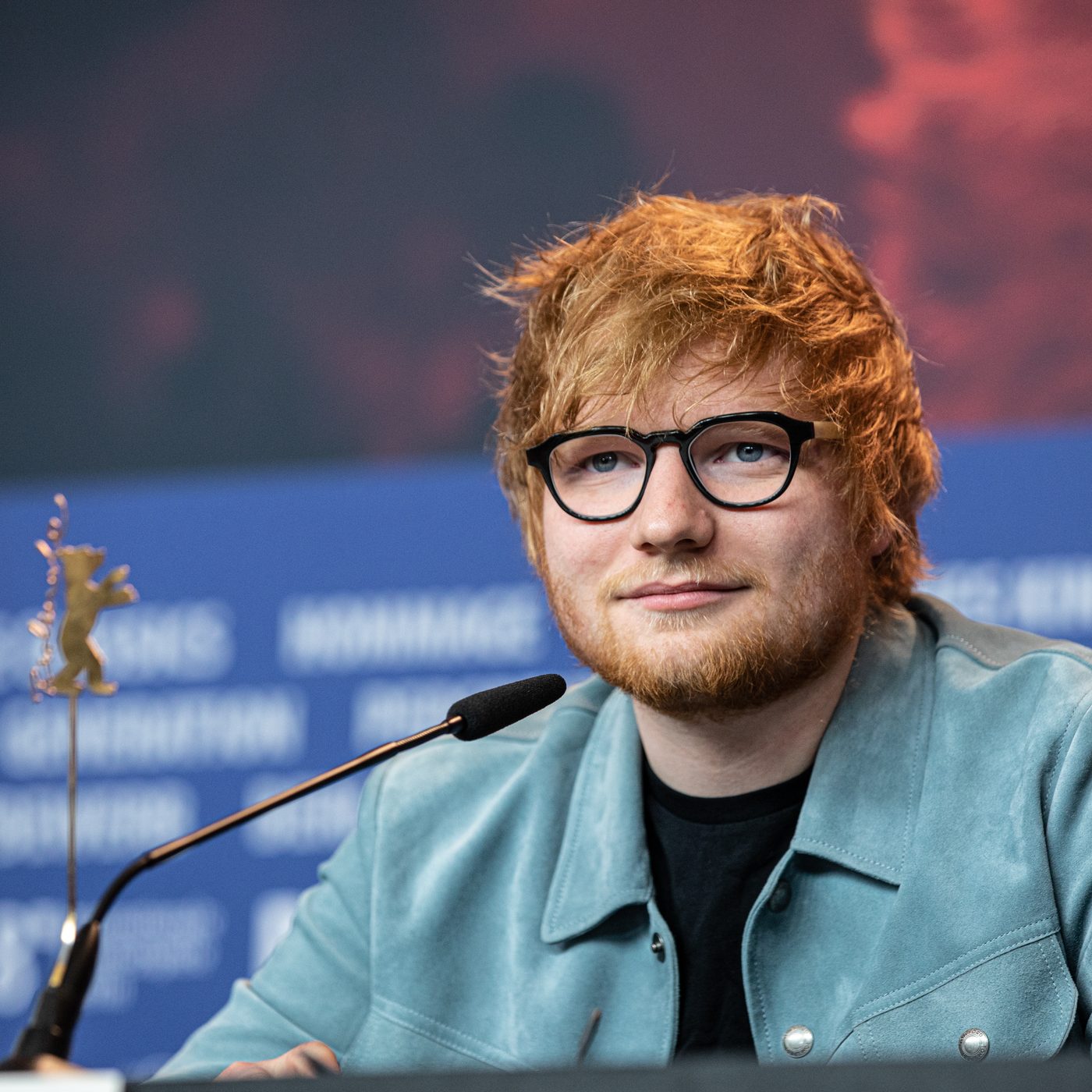

May 4, 2023. A federal courtroom in Manhattan. The jury in Griffin v. Sheeran comes back with its answer: Ed Sheeran's "Thinking Out Loud" did not infringe the copyright in Marvin Gaye's "Let's Get It On." That verdict ended the Townsend heirs' case — according to press reports, the appeal was later withdrawn with prejudice in September 2023. Twelve days after the verdict, the same judge threw out the parallel lawsuit on summary judgment. The plaintiff there, Structured Asset Sales, LLC, an investment firm that bought a slice of the "Let's Get It On" royalties, had demanded more than one hundred million dollars. The Griffin jury found no infringement on May 4, 2023; twelve days later, Judge Stanton granted summary judgment against SAS, rejecting its nine-figure demand. SAS kept fighting to the Supreme Court, which refused to hear the case on June 16, 2025. Two lawsuits, four chords, and a nine-figure demand that bought the plaintiffs nothing in damages.
What the papers say
The caption names Kathryn Townsend Griffin, Helen McDonald, and the Estate of Cherrigale Townsend as plaintiffs, suing as heirs of Edward B. Townsend, who co-wrote "Let's Get It On" with Marvin Gaye in 1973. The defendants: Edward Christopher Sheeran (p/k/a Ed Sheeran), Atlantic Recording Corporation, Sony/ATV Music Publishing, and Warner Music Group.
The second suit is where the money was. Structured Asset Sales, LLC, a Los Angeles firm owned by David Pullman, sued in 2018. SAS bought one-third of Ed Townsend Jr.'s estate assets from his son in a probate-approved sale, amounting to a one-ninth interest in the "Let's Get It On" royalties. The firm's business, per the Second Circuit: it buys royalty interests, securitizes them, and sells the securities to investors.
The complaint accuses Sheeran of copying the melody, rhythms, harmonies, drums, bass line, backing chorus, tempo, syncopation, and looping of "Let's Get It On," and asks the court to find the infringement willful. The record's best detail: Townsend wrote the song sitting at a piano, Gaye recorded it on March 22, 1973, and the July 17, 1973 copyright application lists Townsend as sole author.
The money
The demand: damages "in excess of one hundred million dollars ($100,000,000.00)," including actual damages and the defendants' profits, or statutory damages at SAS's election, plus costs and attorney's fees under Sections 501, 504, and 505 of the Copyright Act. The prayer lists forty-three categories of profits: record sales, downloads, touring revenue, endorsements, name-and-likeness income, even the defendants' equity interests in Spotify.
They were awarded nothing in damages (private payments, if any, are unknown). The Griffin jury found no infringement on May 4, 2023. Twelve days later, Judge Stanton granted summary judgment in the SAS case, dismissing the complaint with prejudice. The Second Circuit affirmed on November 1, 2024, denied rehearing on December 6, and the Supreme Court denied certiorari on June 16, 2025.
The opinions do not publish anyone's legal bills, so I will not invent a number. The captions show Pryor Cashman defending Sheeran — against Parness Law Firm in the SAS case, and against trial counsel including Ben Crump in the Griffin case — through two district court cases, a jury trial, a Second Circuit appeal, and a Supreme Court petition. That is the cost of being right.
The ruling
The court's words, not mine: it is "an unassailable reality that the chord progression and harmonic rhythm in 'Let's Get It On' are so commonplace, in isolation and in combination, that to protect their combination would give 'Let's Get It On' an impermissible monopoly over a basic musical building block."
Translation: the case came down to a four-chord progression and a syncopated harmonic rhythm. The progression had appeared at least twenty-nine times before "Let's Get It On" and in another twenty-three songs before "Thinking Out Loud." The rhythm had been used in at least eight songs before Gaye and fifteen more before Sheeran; the order separately counted at least twenty of Sheeran's own earlier songs. Co-writer Amy Wadge had used a nearly identical combination in her prior song "Better Than Me." The Second Circuit's closer: no reasonable jury could find the two songs, taken as a whole, substantially similar, given their different melodies and lyrics. On this record, that four-chord-progression-plus-harmonic-rhythm combination was too commonplace to protect. It still took two lawsuits to say so.
The risk ledger
Sheeran won both cases — Griffin in 2023, SAS in 2025 — with no damages awarded, and the meter still ran from 2017 to 2025. Two lawsuits. Denied summary judgments in 2019 and 2022. A jury trial. A granted summary judgment twelve days later. A Second Circuit appeal, a denied rehearing, and a Supreme Court petition docketed March 13, 2025 and denied June 16, 2025.
The dragnet pulled in Atlantic Records, Sony/ATV, Warner Music Group, co-writer Amy Wadge and her publishers, and Jake Gosling. The record is silent on what any of them spent, and I will not fill the silence. But nobody litigates forty-three categories of demanded profits through years of motion practice, a jury trial, and two appellate levels for free.
The meter runs whether you win or lose. Sit with that.
The coverage lens
This is the class of allegation that media liability coverage is built for: someone says your creative work infringes their rights, and you need defense counsel before you need anything else. Defense costs are a central part of what the coverage line addresses, and this case is the purest illustration of why: a nine-figure demand, a complete defense victory, and a defense bill that kept running through a Supreme Court petition anyway.
No promises here. Whether any particular claim would be covered depends on the policy as issued, its terms, conditions, limitations, and exclusions, and the facts of the claim. But the category exists because of cases like this.
The docket
- U.S. Court of Appeals for the Second Circuit, Structured Asset Sales, LLC v. Sheeran, No. 23-905, opinion decided November 1, 2024 (PDF via govinfo; records the May 4, 2023 Griffin jury verdict, the May 16, 2023 summary judgment, the royalty math, and the streaming numbers): govinfo.gov
- Same opinion, text version (via FindLaw): caselaw.findlaw.com
- Petition for writ of certiorari, Structured Asset Sales, LLC v. Sheeran, filed March 6, 2025, with appendix containing the S.D.N.Y. opinion and order granting reconsideration and summary judgment (May 16, 2023, with the "unassailable reality" language and the twenty-nine/twenty-three findings) and the clerk's judgment dismissing the complaint with prejudice (May 17, 2023): business.cch.com
- U.S. Supreme Court docket, No. 24-981, Structured Asset Sales, LLC v. Sheeran, petition docketed March 13, 2025, denied June 16, 2025: supremecourt.gov
- U.S. District Court for the Southern District of New York, Griffin v. Sheeran, No. 17-cv-5221 (LLS), opinion and order denying summary judgment, January 2, 2019 (the parties, the heirs' claim, the Townsend piano detail, the March 22 and July 17, 1973 dates): docs.justia.com
- U.S. District Court for the Southern District of New York, Structured Asset Sales, LLC v. Sheeran, No. 18-cv-5839, Second Amended Complaint, filed October 8, 2018 (the $100,000,000 prayer for relief, the forty-three profit categories, the Pullman and Townsend estate details; via RECAP/Internet Archive): ia803107.us.archive.org
- Griffin appeal withdrawn with prejudice, September 2023 (press-reported): lawyer-monthly.com; nme.com
Sources
- Second Circuit opinion, Structured Asset Sales, LLC v. Sheeran, No. 23-905, decided November 1, 2024 (PDF): govinfo.gov
- U.S. Supreme Court docket, No. 24-981 (petition docketed March 13, 2025; certiorari denied June 16, 2025): supremecourt.gov
- SAS Second Amended Complaint, No. 18-cv-5839, filed October 8, 2018 (the $100,000,000 prayer for relief; PDF via RECAP/Internet Archive): ia803107.us.archive.org
Legal disclosure
SongSure LLC is an insurance agency. This article is for general information and education only. It is not legal advice, not insurance advice, and not an offer, quote, or promise of coverage. Case summaries are based on publicly available court records and are simplified; they may omit details. Any coverage would be subject to underwriting review, carrier approval, and the terms, conditions, limitations, and exclusions of the policy as issued. Past case outcomes do not predict future results or coverage decisions. SongSure is in pre-launch and is not currently writing coverage. Consult a licensed attorney for legal questions and a licensed insurance producer for coverage questions.